What the Germiston workshop needed
The client was a busy body repair and modification workshop in Germiston handling accident repairs, custom brackets and reinforcement work for passenger vehicles and light commercial units. Their team needed a practical way to cut a set of repeat parts for body modification work, including mounts, gussets and plate reinforcements that could be welded in with minimal grinding. The brief was clear: clean cuts, accurate hole positions and parts that would fit first time.
This was not a one-off show piece. The workshop wanted parts they could use on multiple jobs, with consistent measurements across batches. The plate sizes ranged from 3 mm to 8 mm mild steel, with a few heavier sections around 10 mm for stress areas. They also asked for a finish that reduced time spent dressing edges before fitment. In a body shop, every minute counts, so the cut quality had to support that pace.
The constraints we worked around
As with many workshops in Germiston, the site had a tight floor area and jobs coming through on a rolling basis. There was no room for long delays or a process that needed a lot of manual rework. The parts also had to work around vehicle bodies that are rarely perfectly straight after damage repairs, so the cut tolerances needed to be practical rather than theoretical.
- Material thickness varied from 3 mm to 10 mm mild steel.
- Hole positions had to stay consistent across repeated batches.
- Edges needed to be clean enough to reduce linishing time.
- Turnaround had to fit around active repair bays and spray work.
- The workshop wanted parts that could be stored and used later without rusting quickly in normal Gauteng conditions.
We also had to account for load-shedding risk, since the shop could not afford unpredictable machine downtime in the middle of a cutting run. That meant planning the job in sensible batches and keeping the workflow straightfoward enough for the team to stage the work as needed.
What we supplied and cut
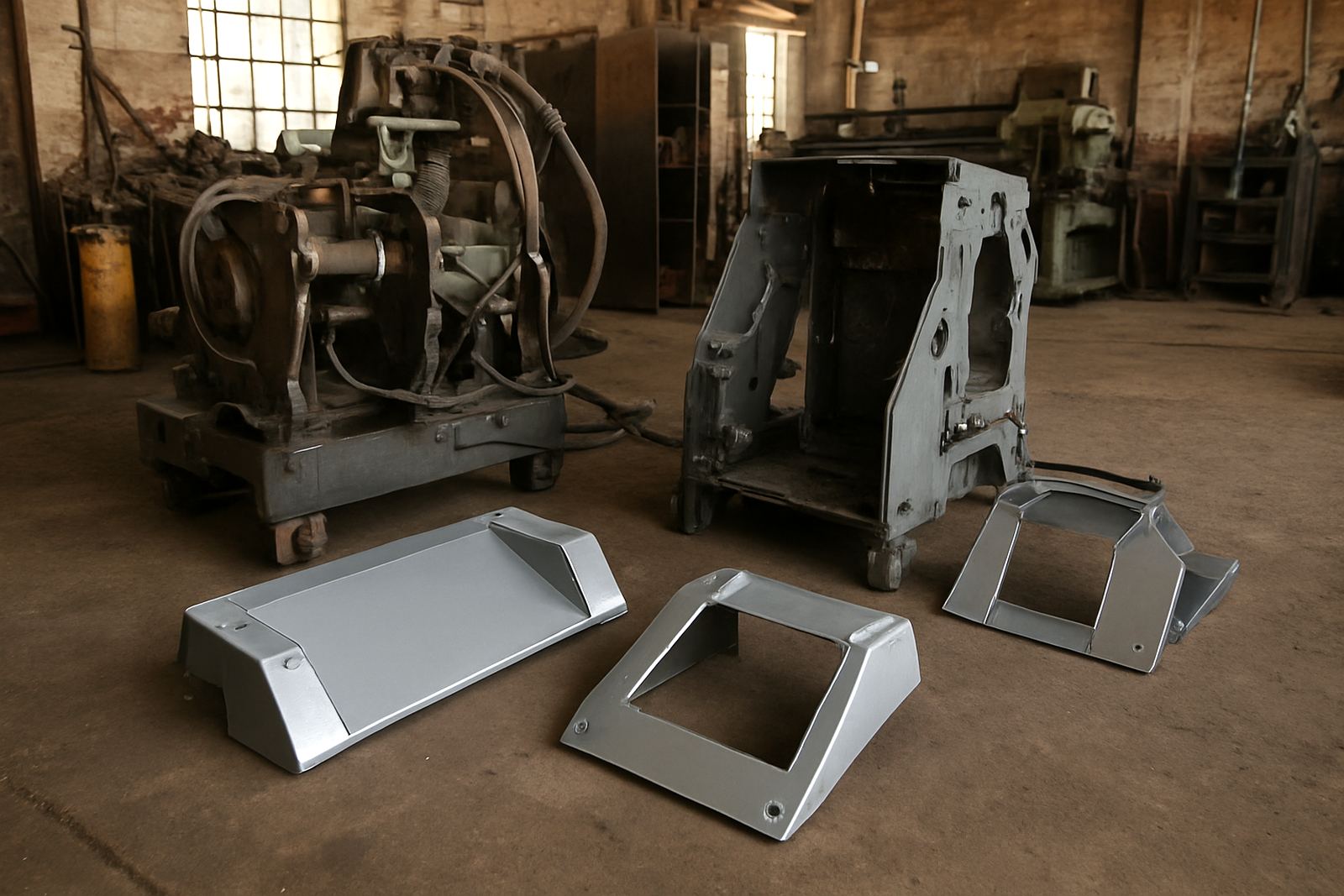
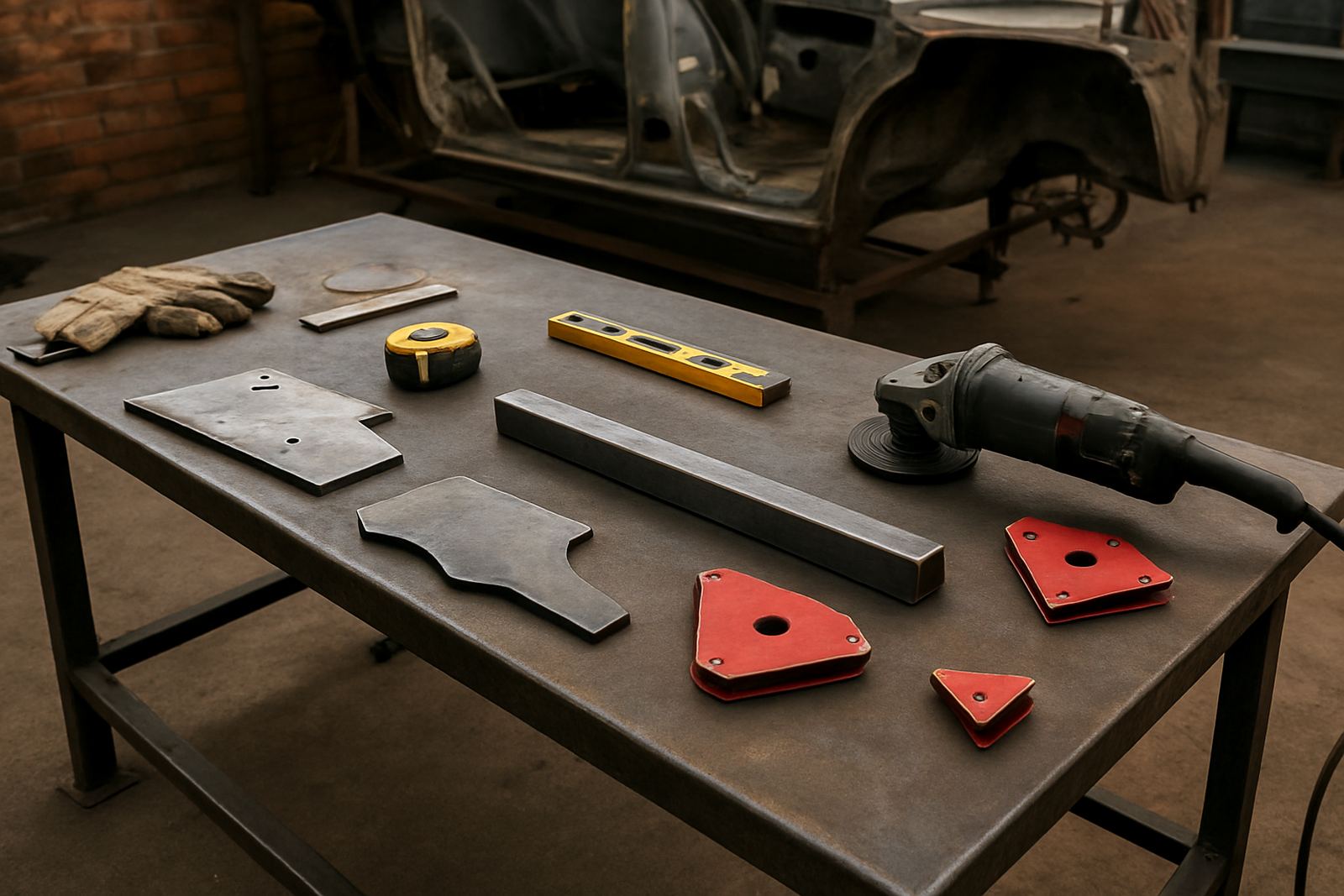
We supplied cut-to-size mounts, reinforcement plates, backing plates and bracket profiles for the workshop’s body modification work. The parts were cut on plasma equipment set up for repeat accuracy, then checked for fit and edge quality before release. Where required, we also added cut-outs and access holes so the finished parts could be welded, clamped and installed without extra drilling on site.
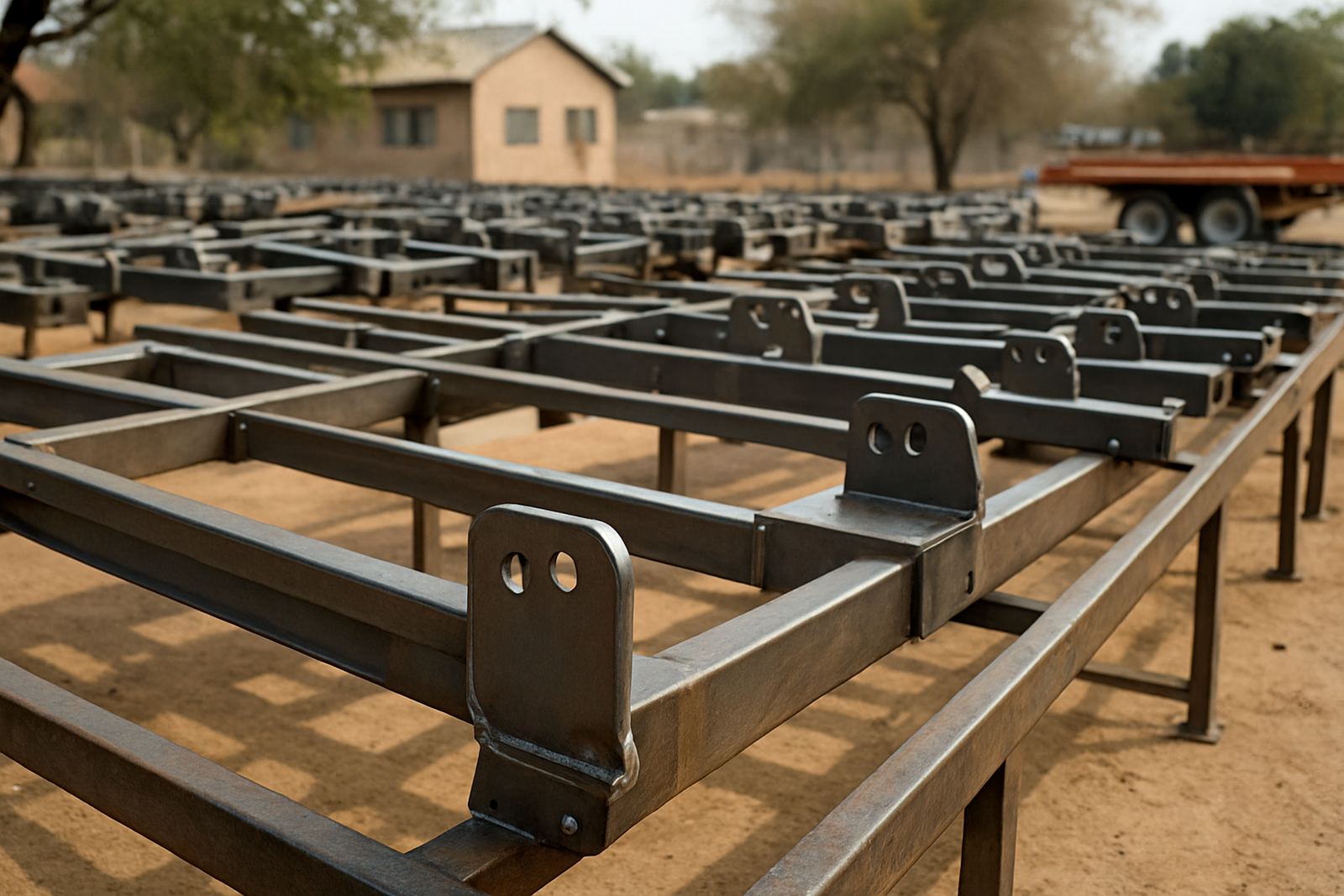
The key facts on this project were simple and practical. We worked from the workshop’s own dimensions and sample parts, then set up the cutting layout to reduce waste and keep the grain direction sensible on larger plates. The final output included flat parts for chassis-side reinforcement, shaped plates for mount points and a run of matching components for repeat jobs. The workshop particularly valued the fact that the parts arrived ready to fit, not close enough. That saved them time on the bench and reduced the chance of distortion during installation.
- Custom mounts for body and accessory fitment.
- Reinforcement plates for repaired or modified sections.
- Repeat batches for common job types.
- Prepared holes and slots for easier assembly.
- Clean edge finish to reduce secondary work.
Timeline from brief to delivery
The job took 2 weeks from first discussion to final handover. Week one was used for measurements, confirmation of the part list and cutting trials on the more critical pieces. We checked fit against sample locations and adjusted the layout where needed to keep the parts practical for the workshop’s installation process. Week two covered the balance of the batch, final checking and delivery to the Germiston site.
The turnaround was kept short because the workshop had vehicles booked in for the same period. That meant there was no benefit in waiting for a large once-off run. Splitting the work into smaller stages made it easier for them to stay productive and let us tighten the final output before the full batch left our side. For this kind of body shop work, that approach usually gives better results than rushing everything into a single cut cycle.
Results in the workshop
The immediate result was less fitting time at the bench and fewer adjustments once welding started. The body shop reported that the mounts lined up properly on the first trial fit, and the reinforcement plates sat flush enough to avoid heavy grinding. That matters when a job is moving between panel beating, welding and prep, because one poor fit can hold up an entire bay.
They also found the repeatability useful. Once the first set had been approved, later batches could be cut to the same pattern with confidence. The workshop could then use the parts on a range of repairs and custom modifications without starting from scratch each time. For a busy Germiston shop, that kind of consistency makes day-to-day planning much easier and helps keep vehicles moving through the floor.
- Less hand finishing after cutting.
- Better fit on first installation.
- More consistent repeat production.
- Faster turnaround on modification jobs.
- Cleaner presentation before paint and final assembly.
What we would keep the same for similar panel and body work
We would use the same approach again for any body shop or vehicle modifier needing small runs of custom cut parts. Start with one clear sample or measured template, confirm the thickness and end use, then cut the first batch with enough time to test fit before the full run is released. That saves material and avoids rework, which is especially useful when the steel stock has to be used carefully.
For future jobs, we would also keep the same focus on practical details like edge quality, hole placement and storage between cutting and fitment. In Germiston and the wider Gauteng area, workshops often work under time pressure and with limited space, so the best results come from parts that are ready for use immediately. When the job is planned properly, the end result is neat, durable and easier for the team to install without fuss.
Key facts
| Project type | Custom body shop mounts and reinforcement plates |
|---|---|
| Town | Germiston, Gauteng |
| Material range | 3 mm to 10 mm mild steel |
| Timeline | 2 weeks from brief to delivery |
| Services used | Cutting, fit checking and batch preparation |
| Typical use | Vehicle body modification and repair work |