
A compact cutting table for tighter workshop floors
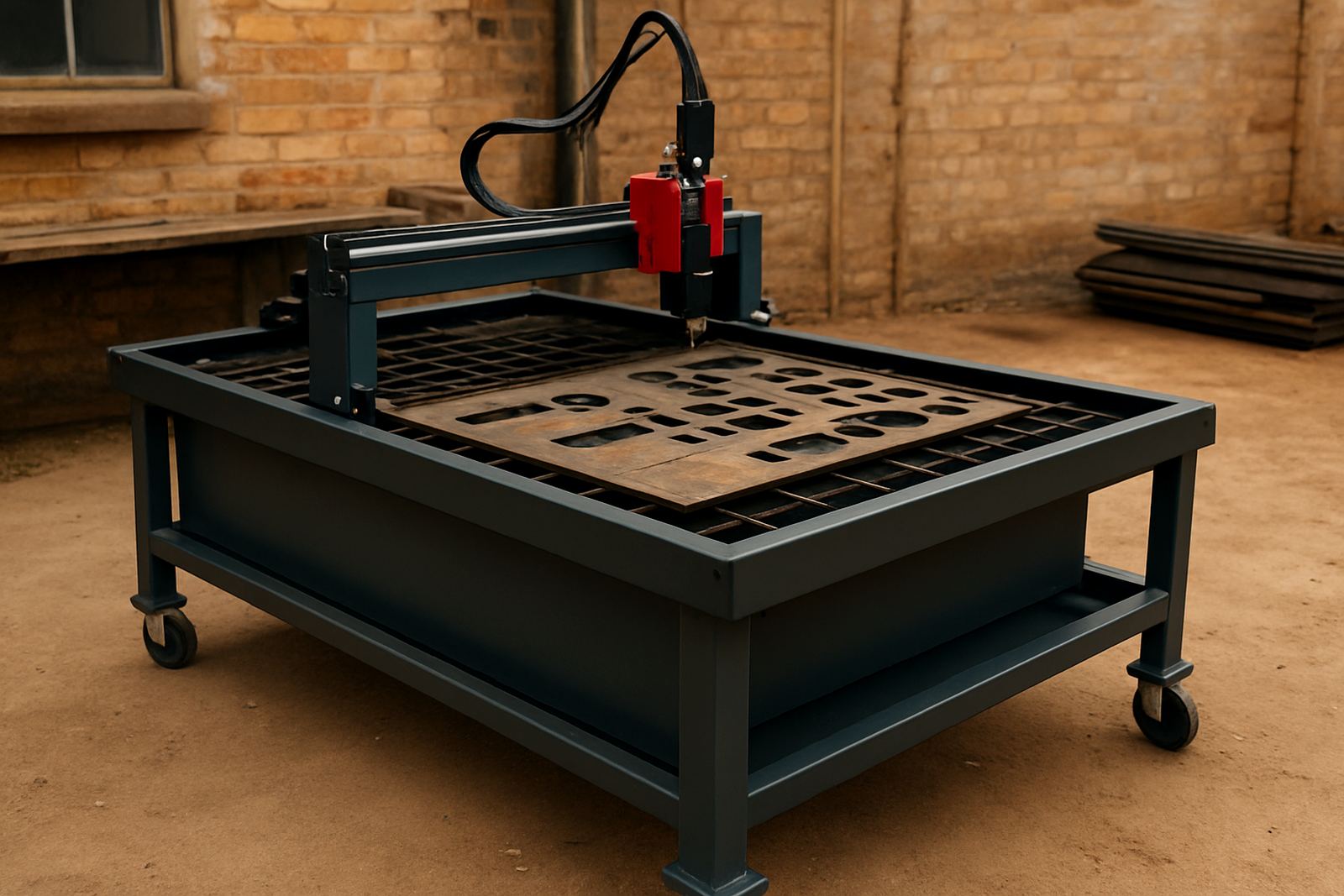
The compact CNC table is made for workshops that need accurate plate cutting without giving up a large section of floor. It suits small fabrication bays, light production lines, repair shops and engineering spaces that are growing piece by piece. For many Vereeniging, Vanderbijlpark and Meyerton workshops, the main challenge is not demand, it is space, power management and keeping output consistent when orders stack up.
This type of table gives you programmed cuts for brackets, flanges, gussets, panels and repeat parts. Once the file is set, the machine follows the same path each time, which helps when you need the same part today and again next month. It is a sensible step up from hand cutting for shops that want neater edges, less rework and better control of material use.
Because the frame footprint is smaller, the machine can be placed in a side bay or against a workshop wall with enough room for loading, unloading and maintenance access. That makes it easier to work around forklifts, tool racks and other equipment that already sits in the shop. In practice, this can free up metres you need for welding, grinding or assembly.
Typical table sizes, motion and cutting range
Compact CNC tables are usually supplied in working sizes that suit sheet and plate jobs without needing a full industrial bay. Common working areas include 1500 x 3000 mm and 2000 x 3000 mm, with other lengths available depending on the layout. A smaller table can still handle useful plate sizes if your work is broken into repeatable parts and nested properly.
The machine uses a controlled torch carriage with programmed X and Y movement, and many setups include automatic height control for steadier cut quality on uneven plate. This helps on material that has a bit of warp, rust or mill scale. A well set table can handle thin sheet for light fabrication as well as heavier plate for general engineering, depending on the plasma power source matched to it.
- Working areas commonly start at 1500 x 3000 mm
- Suitable for mild steel, stainless steel and aluminium, depending on the cutter setup
- Can be fitted with height control for better pierce and cut consistency
- Supports repeat parts, one-off repairs and small batch runs
Cut quality still depends on correct settings, clean air and the right consumables. If the workshop wants sharp corners, less dross and better edge finish, the table has to be matched to the job rather than overworked beyond its rating.
Where a compact CNC table fits best
This product suits businesses that want faster turnaround but do not have room for a large gantry system. It is a good fit for automotive repair work, small metal fabrication shops, maintenance teams, signage framing, trailer repairs and general steelwork. In Bloemfontein and Welkom, it also works well for sites where parts need to be made on a tight schedule and offcuts must be used well.
For growing shops, the main advantage is repeatability. Once the drawing is sorted, you can cut the same shape several times with far less variation than manual methods. That helps when you are making batches of gussets, mounting plates, machine guards or brackets for site work. It also supports cut quality audits, because the machine gives you a more controlled baseline to compare against.
- Fabrication shops wanting more output with less manual cutting
- Repair businesses needing repeatable parts for common jobs
- Operations with limited floor space and a need for simple daily use
- Workshops that must handle local utility interruptions and plan around load-shedding
In coastal or humid conditions the machine area should stay dry and clean, with particular care taken on cables, rails and consumables storage. For inland workshops, dust control matters just as much. A compact machine works best in a tidy bay with good extraction and a place for the air system and spares.
Installation, power and air requirements
When installing a compact CNC table, the first check is space around the machine and access for material handling. You need room to load sheet, clear offcuts and get to the service points. The floor should be level and strong enough for the frame and the plate stock. If the site runs on a generator or inverter during outages, that should be checked against the power source demand before commissioning begins.
Electrical supply depends on the plasma cutter matched to the table, but most setups need a stable single or three phase supply with proper protection. Clean, dry compressed air is also essential for cut quality and consumable life. Air pressure, moisture removal and filtration need to be sorted before the first production run, because dirty air will shorten nozzle life and can cause poor edge finish.
The gas side is usually straightforward on a plasma system, since the main focus is clean compressed air and correct pressure. For some materials and cutting jobs, settings must be adjusted by material thickness and speed. Our team checks machine commissioning, air system inspection and height control calibration as part of setup so the table is ready for actual workshop use, not just a demo cut.
For Gauteng sites, especially those working through load-shedding, it helps to plan the electrical panel, surge protection and restart procedure properly. A machine that is installed with care tends to stay in service longer and causes fewer interruptions during a busy week.
Care, servicing and workshop checks
A compact CNC table is not difficult to maintain, but it does need regular attention. Rails, bearings, slats, torch holders and cable paths should be checked often. Consumables wear with use and must be replaced before the cut starts wandering. If air quality drops or height control drifts, edge finish will suffer quickly. That is why preventive maintenance is cheaper than fixing damage after a breakdown.
PlasmaCutter supports torch repairs, power source repairs, CNC table servicing, spares supply and on site breakdowns across Vereeniging, Vanderbijlpark, Sasolburg, Alberton, Germiston, Meyerton, Bloemfontein and Welkom. We also carry out cut quality audits, consumables checks and operator training so the table keeps producing clean parts instead of chewing through parts and time.
- Check slats, rails and torch height weekly in busy shops
- Drain moisture from the air line and inspect filters often
- Keep consumables on hand for common cutting thicknesses
- Record pierce count and service intervals so wear is easy to track
A table that is serviced on schedule will hold its accuracy better and cost less to run. If the machine starts leaving heavy dross, uneven edges or poor pierces, it is usually time to look at air supply, consumables, height control or a worn motion component before the fault gets bigger.
What to confirm before you order
Before ordering a compact CNC table, confirm the sheet sizes you cut most often, the plate thickness range, and how many parts you need in a day or week. It also helps to know whether the machine will be used for one-off work, batch production or a mix of both. A workshop that mostly cuts 3 mm to 12 mm material has different needs to one that often handles heavier plate.
You should also check the available floor area, entry path for delivery, power supply at the site, and where the compressor will be placed. If the table will be shared between operators, ask about training and the level of support needed after commissioning. In some workshops it is worth planning spare consumables and a small service kit from day one, so downtime does not drag on when a nozzle or tip is due for replacement.
Our team can help you compare table size, cutting demand and workshop layout before you commit. If you are upgrading from hand cutting or moving from a bigger machine to a tighter space, the aim is the same, a table that fits the work and keeps running properly.
Key facts
| Working area | Typically 1500 x 3000 mm or 2000 x 3000 mm |
|---|---|
| Cutting type | CNC plasma cutting for repeatable plate parts |
| Material use | Mild steel, stainless steel and aluminium, depending on setup |
| Control | Programmed motion with optional height control |
| Workshop fit | Compact footprint for smaller fabrication bays |
| Support | Commissioning, training, servicing and breakdown response in Gauteng and the Free State |