What a downdraft CNC table does in daily production
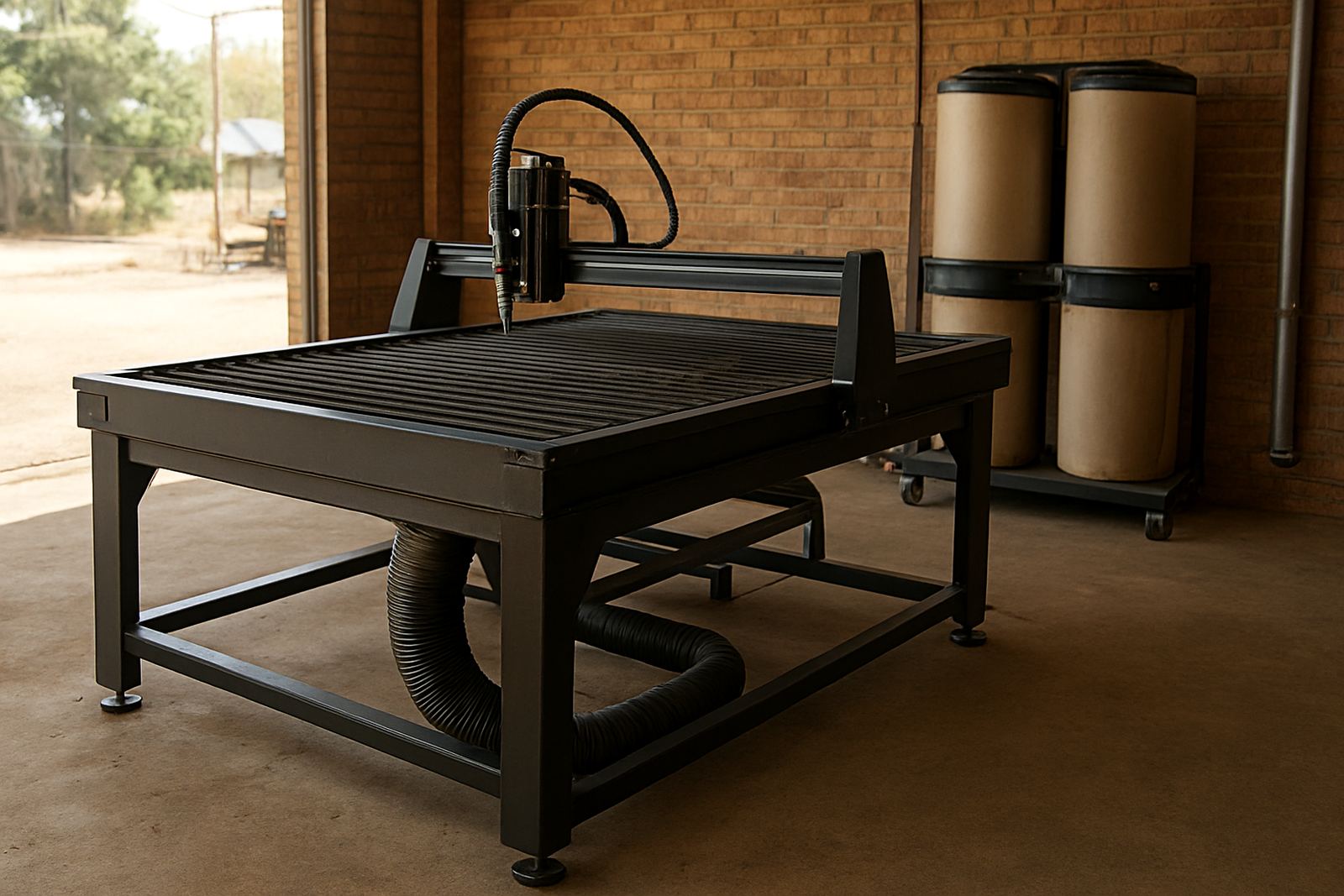
A downdraft CNC table uses extraction below the cut line to draw fumes and light slag away from the operator and into a filtration or ducting system. That keeps the cutting zone clearer, helps reduce clean-up time and makes it easier to see the kerf on longer nests and repeat jobs. For many local workshops, especially where space is tight or multiple machines run in one bay, that extra control matters day after day.
The table is suited to plasma cutting of mild steel, stainless steel and aluminium in a controlled workshop setup. It can be used for one-off work, short runs or production cutting. In Vereeniging and nearby industrial areas, it is often chosen by fabrication shops that need better air management in warm weather, and by facilities where municipal or workplace air control rules need to be taken seriously.
Sizes, bed layouts and practical options
Downdraft tables are usually selected by cutting area rather than machine size alone. A small shop may need a 1.5 m x 3 m working bed, while higher-volume cutting rooms often look at 2 m x 4 m or 2 m x 6 m layouts. The frame, slat spacing and extraction zones can be matched to the type of parts being cut, from brackets and flanges to larger plate sections.
- Working widths from 1.5 m to 2 m
- Working lengths from 3 m to 6 m
- Segmented extraction zones for smaller nests
- Heavy-duty slats for repeated plate cutting
- Optional water-resistant surface treatment for humid coastal or damp storage conditions
Some workshops prefer a simpler manual setup with fixed zones, while others need a more exact arrangement for CNC nesting and high-repeat work. If you are cutting thinner sheet material, a tighter slat layout can help support smaller offcuts. For heavier plate, a stronger bed with easier slag removal makes more sense. The right layout also depends on how often you change material sizes and whether the table must fit through a standard workshop doorway or into a shared bay.
Where this table works best
This product suits metal fabrication shops, automotive repair and parts work, truck body builders, maintenance teams, engineering workshops and contract cutters. It is also useful where the cutting area must stay cleaner because other work happens in the same room. A downdraft system can reduce the spread of smoke and dust, which is helpful when grinders, welders and assembly staff share the same space.
For Gauteng and Free State operations, the table is a practical fit in towns such as Vereeniging, Vanderbijlpark, Sasolburg, Meyerton, Alberton, Germiston, Bloemfontein and Welkom. In smaller towns, workshops often want a unit that is straightforward to maintain and does not need constant fine adjustment. On larger sites, the concern is usually consistency across shifts and keeping the CNC bed running with minimal downtime, even when load-shedding or power dips disrupt the day. A cleaner cut area also helps when parts need to move straight from cutting to bending, welding or painting.
Installation, power and extraction requirements
Installation starts with a level floor, enough clear space around the machine and a proper plan for dust or fume extraction. The table must sit on a firm, flat surface so the cutting head tracks correctly across the full bed. If the workshop floor carries vehicle traffic, lifting equipment or heavy plate, the final position should allow safe loading from all sides that are needed for the job.
Power needs depend on the cutter and control system used with the table. Most setups require a stable single-phase or three-phase supply, a proper earth and protection against voltage dips. In areas affected by load-shedding, many clients also add power conditioning or backup arrangements so the control system is not interrupted mid-cut. Air supply must be clean and dry. That means a compressor sized for the cutter, plus filtration and moisture separation, especially in humid conditions or where pipelines run a long distance across the shop.
- Level floor with clear operator access
- Stable electrical supply with earthing
- Dry compressed air at the correct pressure
- Extraction or filtration matched to cut volume
- Safe cable routing and clear emergency access
Care, servicing and long-term workshop use
Good care keeps a downdraft CNC table productive. Slag, fine dust and cut-off pieces should be removed regularly so airflow stays even across the bed. Slats wear over time and may need turning, replacement or cleaning depending on how often the table is used and what thicknesses are cut. If one extraction zone starts pulling less air than the others, that usually points to blockages, leaks or a fan issue that should be checked early.
Planned maintenance should include consumables checks, air system inspection, height control calibration where fitted, CNC table servicing and cut quality audits. That makes it easier to spot problems before they affect a batch of parts. In workshops near the coast or in areas with higher moisture, rust prevention also matters. A small amount of attention each week is cheaper than replacing warped slats, damaged ducting or a cutter that has been running with poor airflow for too long. Simple housekeeping goes a long way and saves real money.
What to confirm before you order
Before ordering, it helps to define the work you actually cut most often. The bed size, expected plate thickness, daily duty cycle and available floor space all affect the final recommendation. You should also confirm whether the machine needs to sit beside an existing plasma power source or whether a full CNC package is required from the start. If your team works across shifts, ask about operator training too, because one well trained user can prevent a lot of damaged consumables and poor cuts.
It is also worth checking the material mix, because mild steel, stainless and aluminium can place different demands on extraction, air quality and table cleaning. If the workshop does breakdown repair or field installation, ask how spares supply and on site support will work after commissioning. Our base in Vereeniging supports demos and servicing across Gauteng and the Free State, with practical help for businesses in Vereeniging, Vanderbijlpark, Sasolburg, Meyerton, Alberton, Germiston, Bloemfontein and Welkom. Clients reach us through the enquiry form on our contact page, and that keeps the process tidy from first question to final handover.
Key facts
| Product type | Downdraft CNC plasma cutting table |
|---|---|
| Working sizes | 1.5 m x 3 m, 2 m x 4 m, 2 m x 6 m |
| Frame | Heavy-duty welded steel construction |
| Extraction | Below-bed downdraft with segmented zones |
| Typical materials | Mild steel, stainless steel and aluminium |
| Support services | Installation, commissioning, training, servicing and repairs |