
A Practical Setup For Busy Cutting Bays
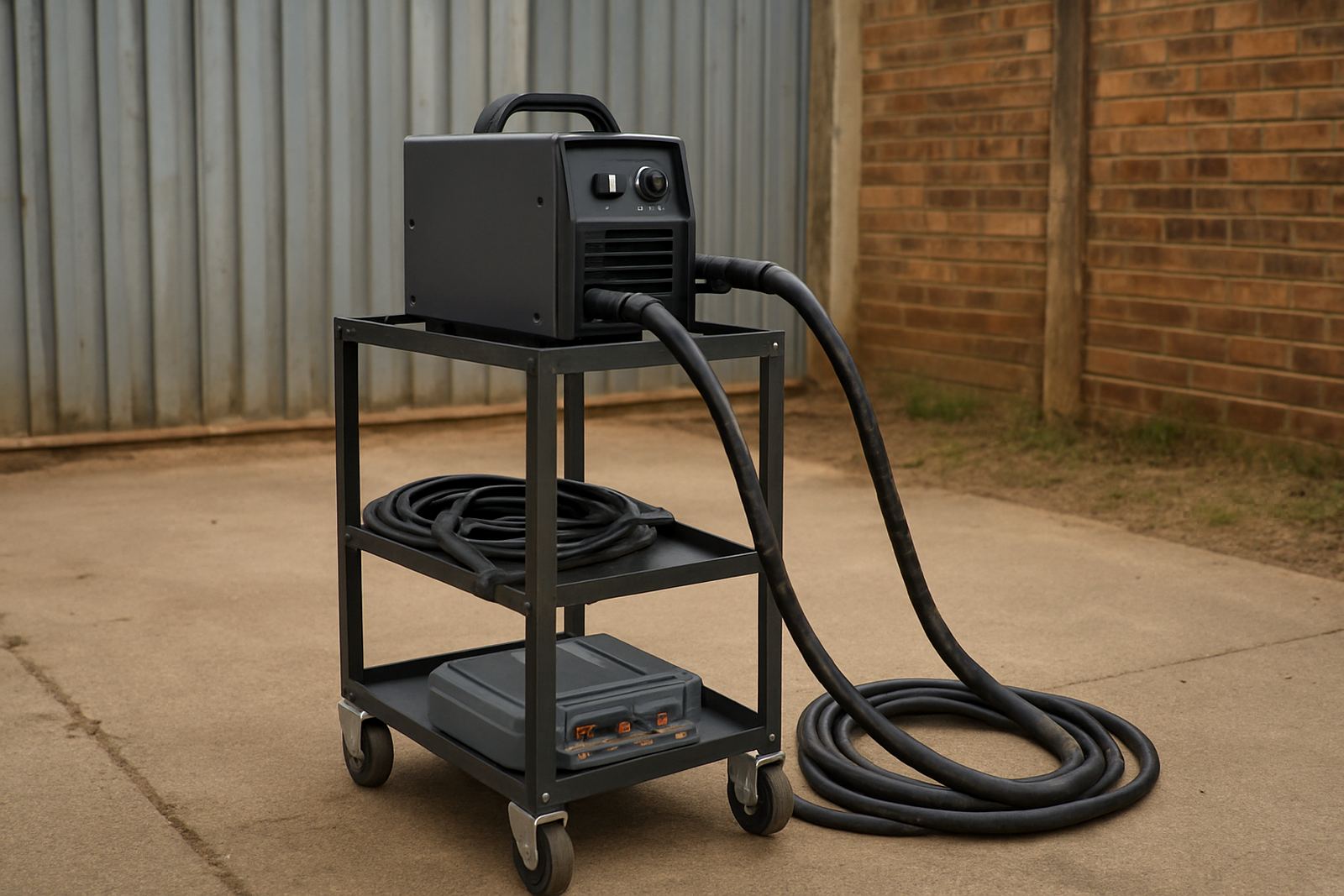
A cart mounted cutter is built for workshops that shift work often, share bays, or need the machine parked neatly near the job. The cutter sits on a wheeled frame with space for the power source, torch lead, work return, gas or air components, and sometimes a bottle bracket or consumables tray. That makes the unit easier to move than a fixed bench setup and reduces wear on leads that would otherwise get dragged, stepped on or caught under material packs.
In Vereeniging, Vanderbijlpark, Sasolburg and surrounding industrial areas, this setup is useful where floor space is tight and jobs change through the day. It also suits smaller fabrication shops that do maintenance work, gate and railing jobs, light structural cutting, and repair work for fleet or plant equipment. The cart keeps the cutter in one place while still allowing you to wheel it close to the job, which helps with cable control and day to day safety.
For operators, the benefit is simple: less lifting, less clutter and a better place to park the machine between cuts. In a dusty workshop or a yard with uneven floors, a proper cart is often the difference between a tidy setup and a cable mess that slows everyone down.
Sizes, Frame Options And Typical Use Cases
Cart mounted cutters are available in different frame sizes to suit handheld units and CNC support equipment. Some are compact for single operator use, while others have a wider base and extra shelf space for accessories and air system components. The right option depends on the weight of the power source, whether a gas bottle or compressor connection is carried on the cart, and how often the unit needs to be moved.
- Compact cart: suited to light workshop use and smaller handheld plasma units
- Heavy duty cart: better for larger power sources, longer leads and frequent movement between bays
- Accessory cart: includes shelves or holders for consumables, torch spares and a small air setup
- CNC support cart: used beside a table or control area for power source and service items
These setups are used in metal fabrication, vehicle repair, trailer building, agricultural repairs and maintenance teams that move from one site to another. A cart mounted cutter also helps where the floor is not perfectly level, because the machine can be repositioned without carrying the full load by hand. In some workshops the cart is ordered with lockable castors, which is a small thing but it matters when the machine must stay put during cutting.
Power, Air And Site Requirements
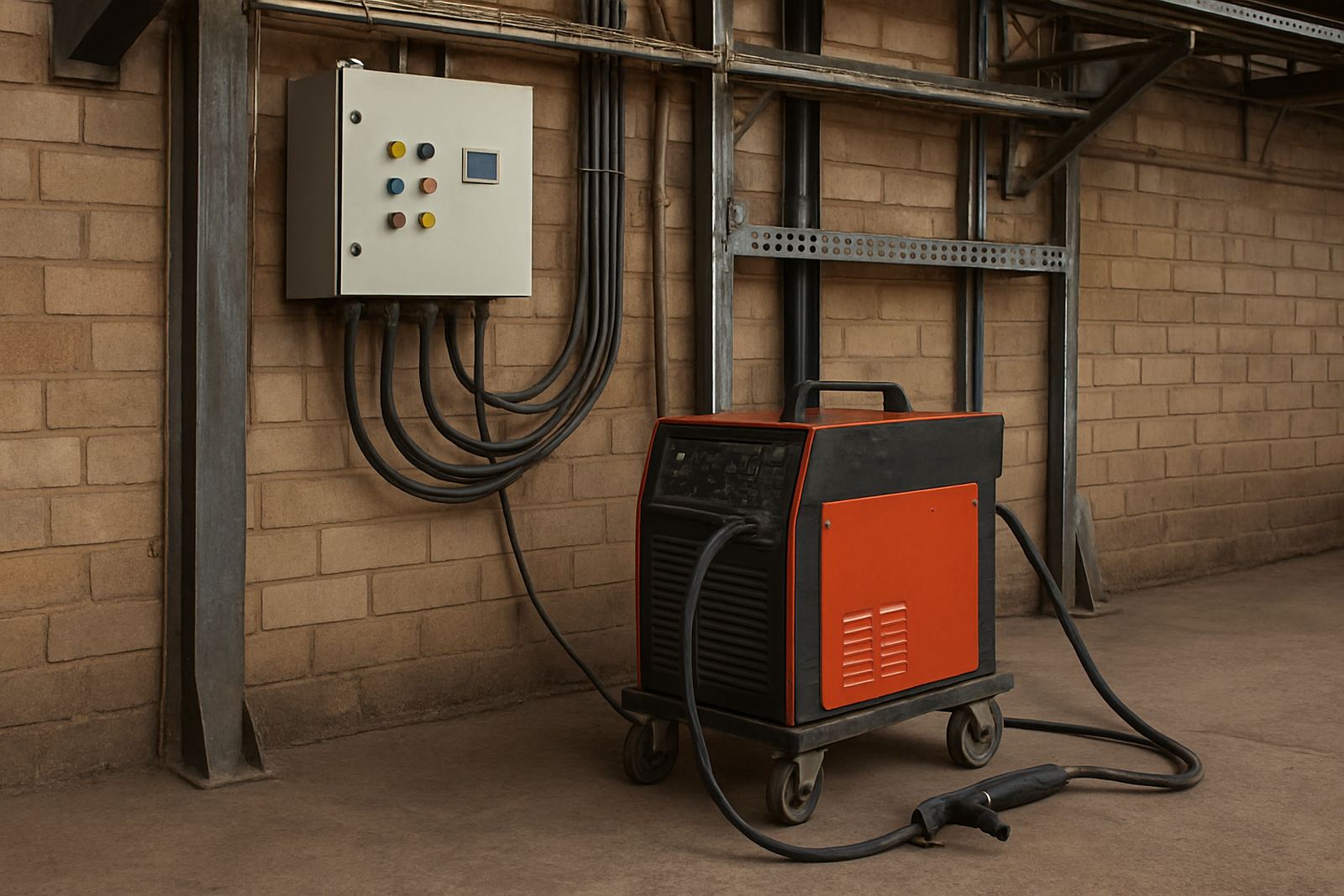
Before installation, it is important to check the supply on site. Most plasma cutters need a stable electrical feed, proper earthing and enough space for ventilation around the unit. Some workshops run on three phase power, while smaller sites use single phase supplies. If the area is affected by load shedding, a generator or backup supply may be needed, but the generator must be sized correctly so the cutter starts and runs without nuisance trips.
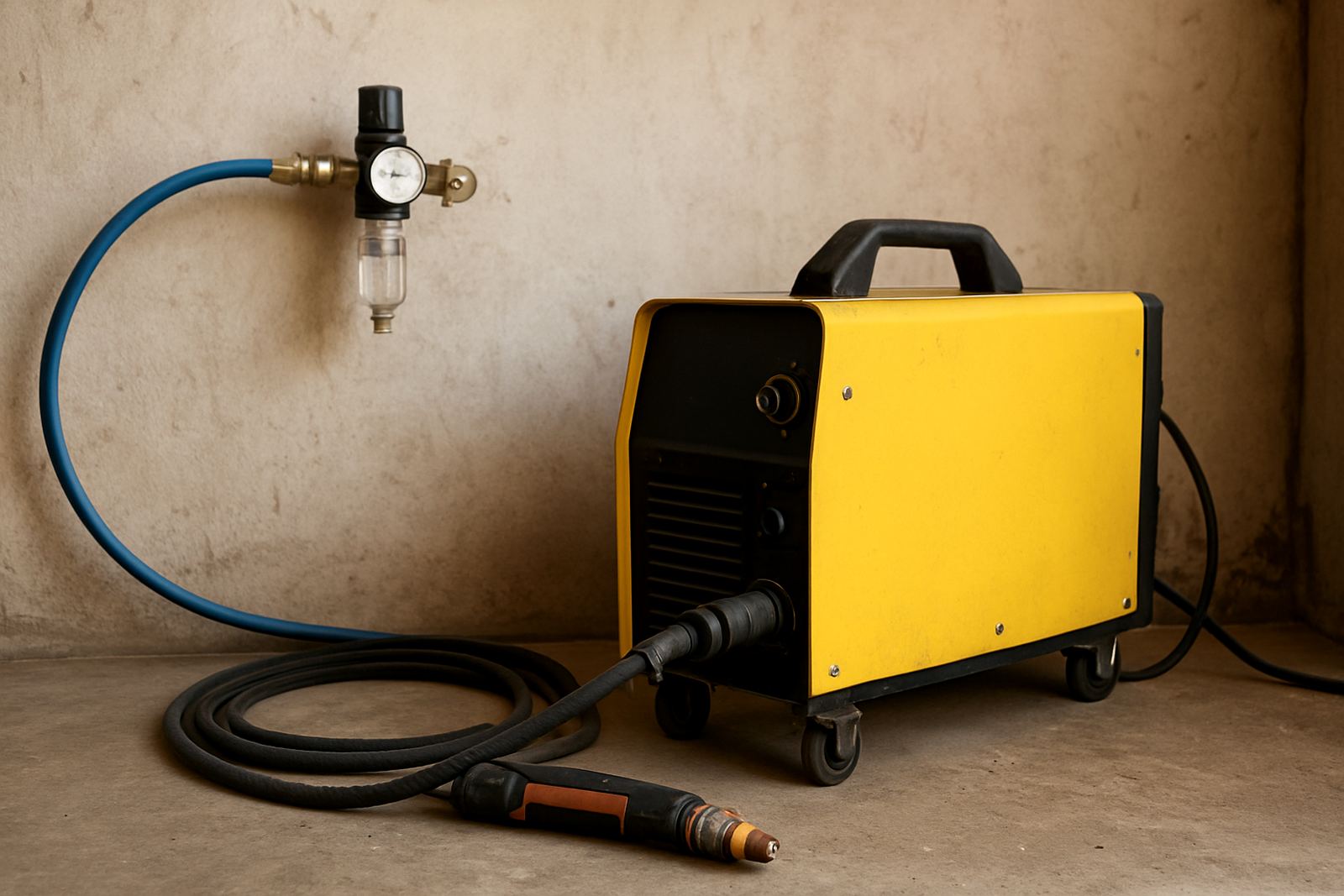
Air quality also matters. A plasma cutter needs clean, dry compressed air at the right pressure and flow. Wet air causes poor arc start, rough cut edges and extra wear on torch parts. In humid areas and coastal conditions the air system should include drying and regular drain checks, but inland workshops around Gauteng and the Free State still need the same discipline because water builds up in lines and filters. If the cutter is used with a bottle or special gas arrangement for a particular process, the regulator and hose condition must be checked before work starts.
- Allow clear space around the cutter for airflow and service access
- Keep power leads and return leads tidy and off hot metal
- Use level ground where possible, with castor locks engaged before cutting
- Check the compressor output and filter condition before each shift
How It Fits Into A Fabrication Workshop
A cart mounted cutter fits well in shops that switch between hand cutting and table work. It is often placed near a prep bay, next to a press area, or close to a CNC table so the operator can move between tasks without resetting the whole floor. The setup is also useful for mobile servicing teams who need a practical machine that can travel in a bakkie or trailer and still arrive in order. For workshops in Alberton, Germiston and Meyerton, where time between jobs is often short, that mobility saves hassle.
On a running shop floor, safer cable management is one of the main gains. Leads stay together, torch parts are not left on benches, and the machine is less likely to be damaged by forklifts, scrap bins or steel offcuts. It also makes housekeeping easier, which helps with internal safety checks and municipal compliance on clear walkways and access routes. A neat setup is not just about looks, it cuts down on faults caused by bad handling.
If the machine is being used on site, the cart should be checked for wheel condition, brake action and a stable base before transport. Loose fittings, damaged holders or bent frames should be dealt with before the cutter is moved again.
Installation And Commissioning Checklist
When a cart mounted cutter is installed, the main goal is to get the power source, torch, air supply and return lead working together without strain. Commissioning should include a full check of the supply, the airflow, the torch connection, polarity where relevant and the cut test on material similar to the customer’s normal work. If the cutter is going into a production area, the machine position should also suit the operator’s reach and the path of the cables.
- Confirm electrical supply and protection on site
- Check air pressure, filter condition and hose routing
- Inspect torch lead, clamp and fittings for wear
- Test cut on sample plate and set the correct speed
- Verify wheels, brakes and cart stability before daily use
For customers in Bloemfontein and Welkom, our team can assist with setup, operator training and practical guidance on first use. A proper handover makes a difference because many cutting problems come from small setup faults, not from the cutter itself. Once the machine is installed correctly, it should be easier to use and easier to keep in service.
Consumables, Servicing And What To Confirm Before You Buy
Regular care keeps a cart mounted cutter working properly. Consumables should be checked before they are run too low, torch parts should be inspected for heat damage and the air system should be drained and cleaned on schedule. If the machine is used daily, preventive maintenance should include lead inspection, fan and filter cleaning, and a review of the cart frame, castors and cable supports. These small checks help avoid downtime during busy weeks.
When ordering, it helps to know the material thickness, the type of work, whether the cutter will be used by hand or beside a table, and how often it needs to move. It is also worth checking the floor surface, since rough concrete, steel plate or mixed yard surfaces can affect wheel choice. If the unit will be moved across more than one bay, make sure the cart can handle the load and that the power cable length suits the layout. That point often gets overlooked.
PlasmaCutter supports clients from Vereeniging across Gauteng and the Free State with torch repairs, power source repairs, consumables checks, preventive maintenance, machine commissioning and operator training. If you need help selecting the right cart mounted setup for your workshop, Marius van der Merwe and the team can guide you through the options and what to order first.
Key facts
| Frame type | Wheeled workshop cart with lockable castors |
|---|---|
| Use | Handheld plasma cutter support and mobile workshop handling |
| Power supply | Single phase or three phase, depending on cutter model |
| Air supply | Clean, dry compressed air with correct pressure and flow |
| Typical load | Sized to suit the selected power source and accessories |
| Common applications | Metal fabrication, vehicle repair, maintenance and light production |