
Farm Shed Maintenance in Sasolburg
The client was a farming operation near Sasolburg that needed practical repair parts for equipment kept under a shed and used daily during maintenance seasons. The brief was simple: cut accurate replacement plates and tabs that could be welded on without rework, so the team could keep machines moving instead of waiting on outside fabrication.
The shed layout and the working environment mattered. Dust, vibration and regular loading and unloading meant the repair pieces had to match existing holes and edges properly. There was also the usual Free State reality of early starts, cold mornings and short maintenance windows between jobs, so we worked to keep the turnaround tight and the parts easy to fit.
- Client type: agricultural maintenance team
- Town: Sasolburg
- Environment: farm shed, dusty work area, daily equipment use
- Main need: repair plates and replacement tabs with accurate fit-up
The Brief And The Constraints
The request came through with a clear focus on repair practicality rather than cosmetic finishing. The team needed plates for worn sections and new tabs for broken or missing mounting points on agricultural equipment. The parts had to be cut cleanly so the welders on site could prep and fit them without spending extra time grinding edges or reshaping holes.
One of the main constraints was downtime. The equipment could not be out of service for long, and the farm shed did not allow for long setup delays. We also had to work around parts that had seen years of use, so measurements were taken against the existing components instead of relying only on old drawings. That meant checking for distortion, wear and slight mismatches before cutting anything.
- Limited downtime between maintenance tasks
- Worn parts with uneven edges and previous repairs
- Need for clean weld-ready edges
- Fitment against existing components, not just paper measurements
What We Cut And Supplied
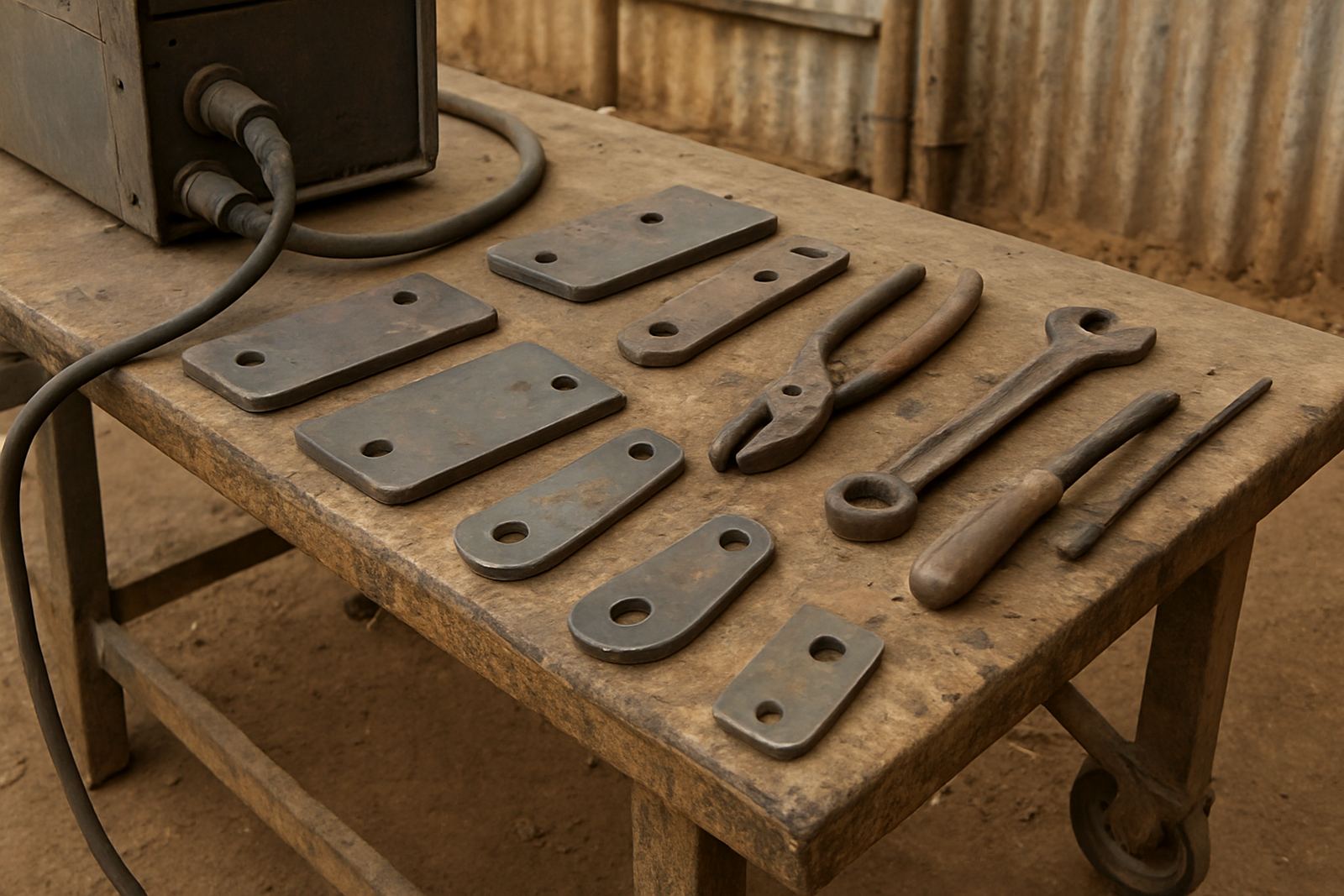
We supplied repair plates and replacement tabs cut for agricultural maintenance use, with attention paid to clean edges and repeatable fit. The parts were prepared so the team could weld them in directly, without a long finishing stage. Where tabs needed holes, we kept the positions consistent so the bolts and pins lined up properly on installation.
The material thicknesses were selected to suit the load and wear expected on the equipment. For the repair plates we worked with 6 mm and 8 mm steel, while the tabs were cut from 6 mm steel to give enough strength without making them bulky. Typical pieces ranged from 50 mm x 70 mm tabs to larger plates around 180 mm x 220 mm, depending on the worn section being repaired.
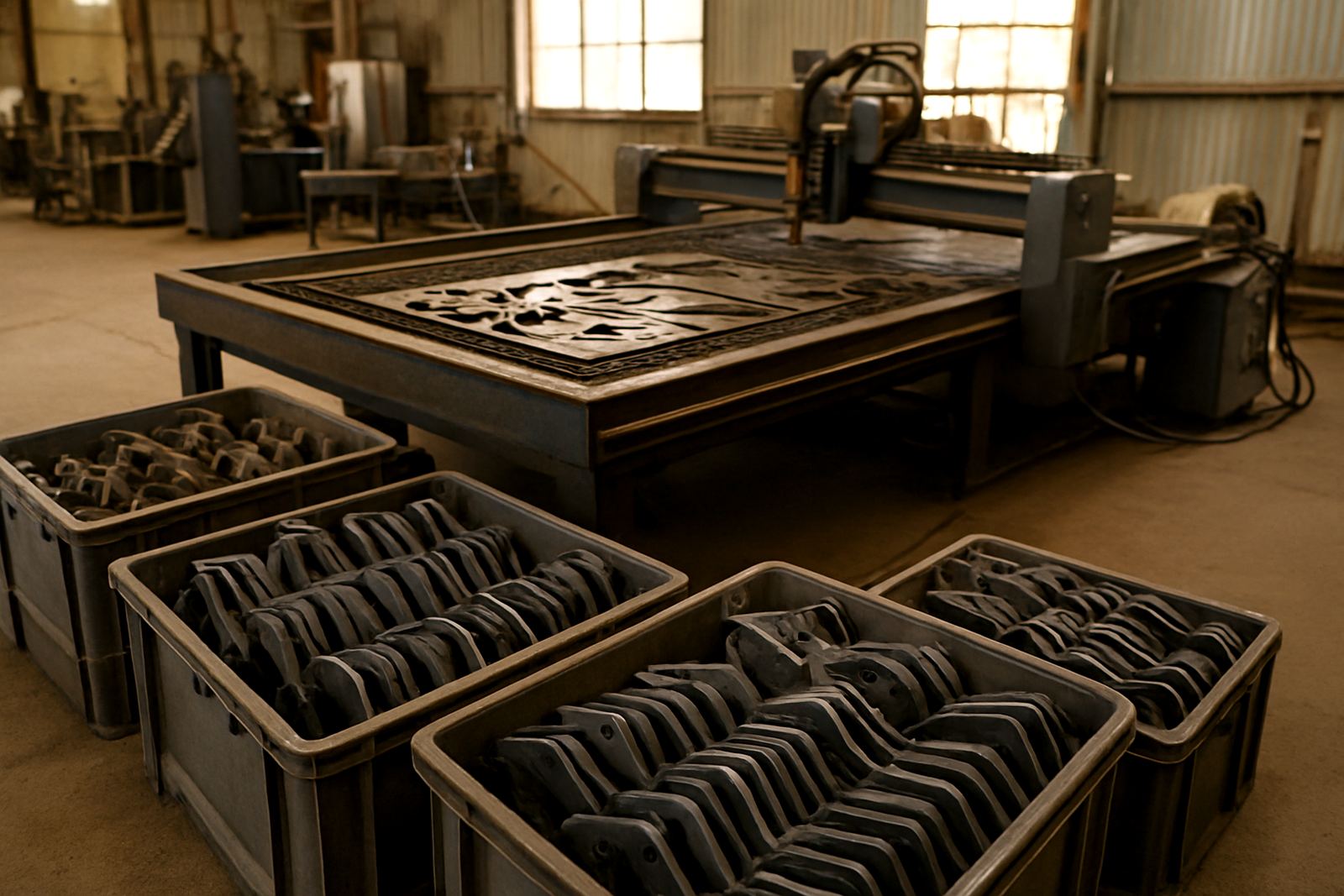
Because the work was for a farm shed, it also had to be easy to store, sort and identify. Each set of parts was grouped by job type so the maintenance crew could move through the repairs in order. That small step saved time on site and reduced mix-ups between similar pieces.
- Repair plates in 6 mm and 8 mm steel
- Replacement tabs in 6 mm steel
- Typical tab size: 50 mm x 70 mm
- Typical plate size: 180 mm x 220 mm
- Parts grouped by job for easier installation
Timeline From Measure Up To Delivery
The full job ran over two weeks. In week one, the damaged areas were checked, sizes were confirmed and the cutting list was finalised. In week two, the parts were cut, checked against the original equipment and prepared for handover. The schedule was short enough to suit the maintenance window but still allowed for a proper check before release.
There was no need to rush the fitment by guessing. We confirmed hole spacing, tab orientation and plate size before sending the parts out. That matters on agricultural machines because if one tab is out by only a few millimetres it can throw off the whole repair. The result was a set of pieces that the welders could take straight to the job with very little extra dressing.
- Week 1: inspection, measurements and cut list confirmation
- Week 2: cutting, checking and handover
- Final check: hole spacing, edge finish and tab orientation
- Outcome: minimal extra grinding before welding
Results On The Shed Floor
The repair plates and tabs restored the worn mounting points and patch sections without forcing the client to rework the parts. The equipment could go back into service faster because the pieces fitted properly and the weld prep was already suitable. That saved time in the shed and reduced the chance of a repair failing because of poor alignment.
For the maintenance team, the main win was consistency. The parts arrived ready to use and the crew did not have to second-guess the sizes. In practical terms, that meant fewer delays, neater welds and less strain on the people doing the repairs. On a busy farm schedule, that matters more than fancy presentation.
- Better fit-up on worn mounting areas
- Less grinding and rework on site
- Faster return to service for the equipment
- Cleaner weld prep and neater finished repairs
What We Would Carry Into The Next Farm Shed Job
If this Sasolburg repair came up again, we would still start on site, verify the worn sections and cut to the real machine rather than the old part alone.: confirm the worn sections on site, check the measurements against the actual equipment and cut the parts to suit the repair sequence. That approach works well where machines have had years of service and the originals are no longer square or perfectly aligned.
We would also keep the parts grouped and labelled from the start, especially when a shed holds several machines at once. It helps the team move through the work more quickly and avoids confusion when multiple tabs and plates are going onto different items. For agricultural maintenance, the smallest detail can save an hour later on, or more.
- Measure against the actual worn parts
- Keep parts grouped by machine or repair area
- Allow for distortion on older equipment
- Use weld-ready cuts to reduce on-site prep
Key facts
| Project | Sasolburg Farm Shed |
|---|---|
| Client type | Agricultural maintenance team |
| Town | Sasolburg |
| Scope | Repair plates and replacement tabs |
| Material | 6 mm and 8 mm steel |
| Timeline | 2 weeks |