
Why a dirty filter causes more than poor airflow
A clogged filter does not only slow air through the machine. It makes the cooling system work harder, traps heat around the power source, and can let fine dust settle on terminals and control boards. Over time that sort of build-up can mean nuisance faults, unstable arc starting, or a machine that trips earlier than it should.
In workshops around Vanderbijlpark, Sasolburg and Germiston, we often see the same pattern: the machine is cutting well one week and then starts acting up after a spell of grinding, sanding or dry weather. The filters catch some of that dirt, but if they are left too long between checks the machine ends up breathing through a blocked path.
Set a cleaning routine that matches your work area
There is no single interval that suits every shop. A small fabrication bay in Meyerton may only need a quick filter check every two weeks, while a busy CNC table in Alberton running all day may need attention once a week. Coastal humidity is not the main issue in Gauteng and the Free State, but dust mixed with moisture can make grime stick harder to filter housings and vents.
- Check pre-filters and inlet screens at the start of each shift.
- Blow out loose dust with dry air, but keep the nozzle at a safe distance.
- Wash reusable filters only if the manufacturer allows it and let them dry fully.
- Replace damaged or crushed filters rather than trying to straighten them.
If a filter is darkened from oily fumes or cutting close to painted material, cleaning may not restore proper flow. In that case, replacement is the safer call.
What to look for during a filter inspection
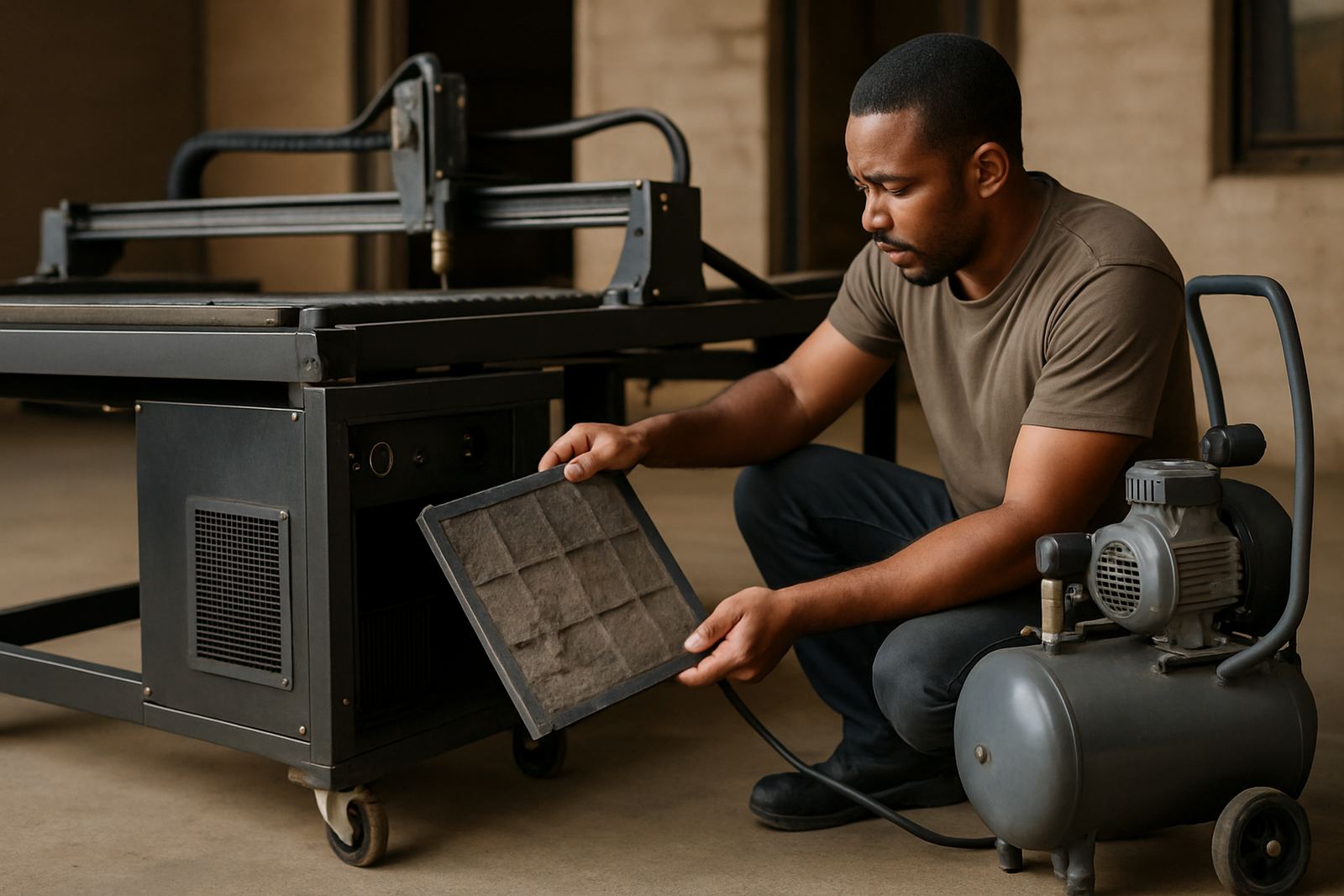
A proper filter check should be visual and practical. Open the cover, inspect the mesh or element and look for dust caking, oil residue, rust marks, tears or loose clips. Also check whether the housing is sitting square and whether any seal has gone hard. A poor seal can let unfiltered dirt bypass the filter completely.
In Vereeniging base servicing, we often find that the filter itself is only part of the problem. The surrounding intake path may be packed with offcuts, wire ends or metallic dust. If the air intake is restricted, the machine can overheat even when the filter looks passable from the outside.
- Look for discolouration that suggests heat stress.
- Check that fan grills are clear and not bent inward.
- Make sure no cables are rubbing against the filter cover.
- Confirm that intake air is coming from a clean area, not from the grinding bench.
Why clean filters matter for electrical reliability
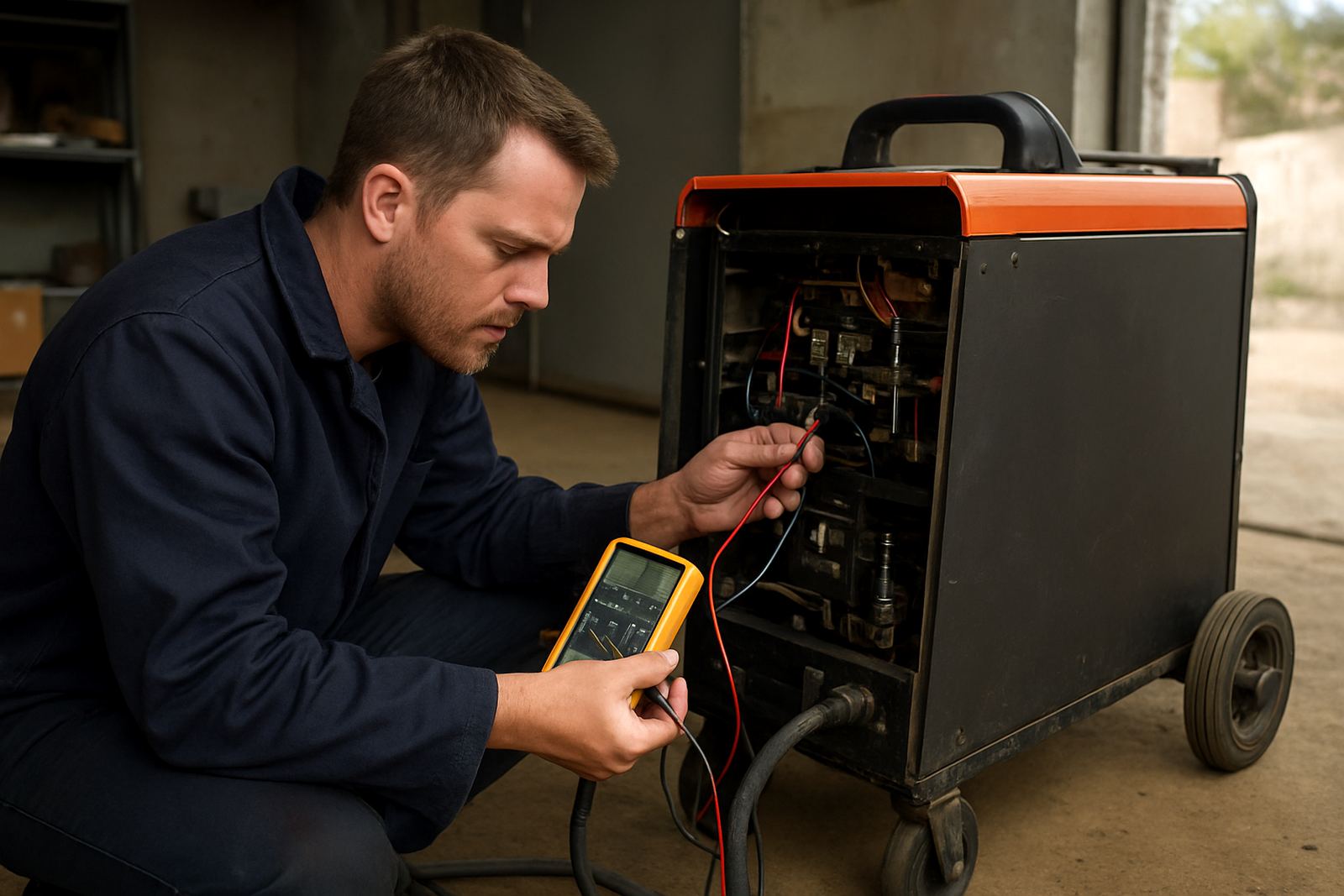
Plasma cutters depend on steady internal cooling and clean electrical contact. When dust settles on boards, relays, terminals or the torch lead path, it can create tracking and unwanted resistance. That can show up as intermittent faults, weak starts or control signals that do not read correctly.
We have seen this in mixed-use workshops in Bloemfontein and Welkom where a cutter sits close to welders, grinders and compressors. The machine may still power on, but the internal conditions are no longer ideal. Clean filters help reduce the amount of airborne dirt reaching sensitive parts, which gives the electrical system a better chance of staying stable.
A practical cleaning method for South African workshops
Good filter cleaning does not need special equipment, but it does need care. Switch the machine off, isolate it properly and let it cool before opening the cover. Remove loose dust outside the machine area so you are not pushing grit back into the cabinet. If compressed air is used, keep pressure moderate and avoid forcing dirt deeper into fins or channels.
Do not use water where the filter or housing is not meant to get wet. In places like Sasolburg where airborne residue can be fine and sticky, a damp cloth on external panels can help, but the internal filter area should stay dry unless it is a washable type. Dry every part fully before closing the machine, because trapped moisture and load shedding related restarts can be a bad combination.
- Use clean gloves so oil from your hands does not coat the element.
- Check the fan spins freely after cleaning.
- Watch for damaged foam or warped plastic frames.
- Log the date so you can track service intervals better.
When filter cleaning should become a service call
If the machine keeps overheating, if the filter clogs again very quickly, or if there is a burning smell after cleaning, the issue may be deeper than surface dirt. A fan motor can slow down, a temperature sensor can drift, or the cooling path may have a hidden blockage. In those cases a proper inspection is worth it.
Our field service team works across Vereeniging, Vanderbijlpark, Meyerton, Alberton, Germiston, Sasolburg, Bloemfontein and Welkom for breakdowns, maintenance and commissioning. We also handle torch repairs, power source repairs, CNC table servicing, height control calibration, operator training and cut quality audits, so a dirty filter can be checked as part of the wider machine condition.
For shops that run long hours or take on mixed thickness material, filter care should sit alongside consumables checks and air system inspection. That simple routine saves time and keeps the machine ready for the next job, instead of waiting for a fault on a busy Monday morning.