Why torch leads fail sooner than they should
Torch leads do more than carry current. They flex, twist, drag across floors, rub on sheet edges and pick up dust, oil and moisture from the workshop. In places like Vereeniging, Vanderbijlpark and Sasolburg, the combination of fine metal dust and seasonal humidity can work its way into small nicks and weak spots if the leads are not checked properly.
Many failures start small. A pinched section near the torch handle, a loose connector or a lead that gets coiled too tightly after every shift can all lead to poor arc starts, erratic cutting and heat build-up. If the lead is already damaged, the machine may still run but the cut quality drops and the fault becomes expensive later.
Daily handling habits that save the cable
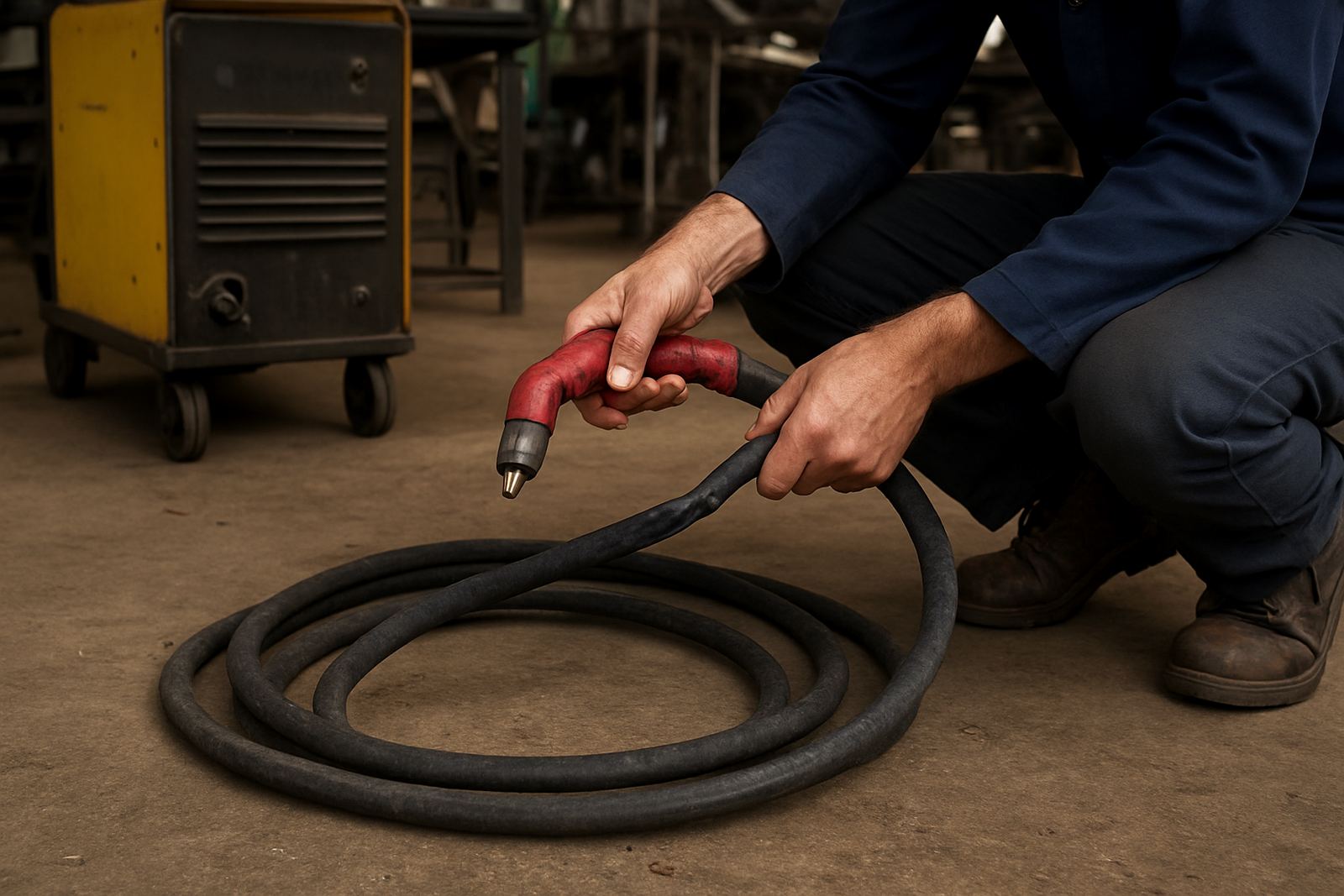
The simplest maintenance is careful handling. Do not pull a torch by the lead, and do not drag it across sharp corners, welded edges or hot offcuts. When a job is done, lay the lead down in a wide loop rather than forcing it into a tight coil. Tight wrapping puts stress on the inner conductors and the strain relief near the torch neck.
- Keep leads off the floor where possible and away from grinding sparks.
- Move the torch with slack in the line, not tension.
- Use proper hooks, reels or hangers for storage.
- Never trap the lead under bins, plates or machine feet.
In a busy fabrication bay, one person stepping on a lead may not seem like much, but repeated crushing will break down the insulation long before the outside damage is obvious. That is why handling discipline matters on every shift, not just when a fault appears.
What to inspect before and after each shift
A short inspection takes less than a minute and can prevent a breakdown later. Check the full length of the cable from the torch body to the machine side connection. Look for cuts, flattened areas, burn marks, swollen sections, brittle insulation and exposed wire. Pay extra attention to bends near the handle, the machine entry point and any place where the lead bends around a table edge.
Also check the connectors. A loose fitting can cause heat, unstable arc behaviour and intermittent faults that are hard to trace. If the machine uses a pilot arc or CNC torch setup, inspect the trigger line, shielding parts and any strain relief carefully. On CNC tables, a lead that catches on the gantry or drags over a cut bed can suffer hidden damage even when the outer cover still looks fine.
- Feel for hot spots after cutting runs.
- Check for ozone smell, cracking or melted insulation.
- Confirm the lead moves freely with no snagging.
- Inspect the torch neck where it joins the cable.
Storage and routing in real workshop conditions
Good storage is not complicated, but it must suit the work area. Leads should be routed away from pedestrian paths, forklifts and material handling zones. In smaller workshops around Alberton, Germiston or Meyerton, the torch often gets moved from one bay to another, so routing needs to avoid repeated bends over the same spot. Repetition causes wear much faster than most operators expect.
If the workshop is close to the coast or has high moisture on certain days, keep the leads dry and out of puddles. Where dust from cutting and grinding builds up, wipe the cables down during routine clean-up so grit does not grind into the outer sleeve. Store the torch in a dry place and avoid hanging the lead on a hook that is too narrow, because that creates one hard bend point every time.
A practical rule is simple: if a lead cannot be stored without being crushed or kinked, the storage method is wrong. Better storage means fewer callouts, fewer interruptions and less money spent on premature replacements.
When to stop using the lead and call for service
Some signs mean the lead should come out of use straight away. If the insulation is split, the conductor is exposed, the torch is overheating or the arc is unstable even after cleaning and tightening connections, the cable may already be unsafe. Do not wrap tape around a badly damaged section and keep working for long. That can hide the problem but not fix it.
For handheld units, repeated misfires, poor start performance and abnormal noise can point to internal lead damage. On CNC systems, erratic torch height behaviour, cut variation or arc drop-out may also be traced back to the torch lead, not only the power source or table settings. A proper inspection can save time by separating lead faults from gas, air or machine issues.
- Visible copper, scorched insulation or cracked outer sheath.
- Frequent breaker trips or unexplained arc faults.
- Burning smell near the handle or machine end.
- Damage after a torch catch, crush incident or fall.
A Vereeniging example from a working floor
In one Vereeniging fabrication shop, a torch lead kept failing at the same point near the handle. The team had already replaced consumables and checked air pressure, but the machine still gave inconsistent starts. The issue turned out to be the way the lead was being coiled every evening. It was pulled tight on a small hook and bent sharply at the same spot day after day.
Once the storage method changed and the lead was rerouted away from a busy walkway, the faults dropped. The shop also started weekly inspections for nicks and loose connectors, which helped them catch wear early. The fix was not complicated, just consistent. That is usually the case with torch lead care. The small habits matter more than one big repair later.
For workshops in Gauteng and the Free State, especially where load-shedding, dust and stop-start work are part of the week, this kind of routine keeps the cutting line steadier. It also helps with planning because you are less likely to lose time during a rush order or an on-site breakdown.
Simple maintenance that keeps cutting costs under control
Maintain torch leads as part of your normal service routine, not only when something breaks. Combine visual checks with consumables checks, air system inspection and preventive maintenance so small issues are caught before they become downtime. If the lead moves smoothly, stays cool and shows no external damage, the machine has a better chance of delivering clean, accurate cuts all day.
Good torch lead care does not need special equipment, just a steady habit. Keep it clean, keep it dry, keep it clear of sharp edges and do not force it into tight bends. That is usually enough to extend service life and reduce unexpected faults in both hand cutting and CNC work.
For operators and supervisors, the message is straightforward: treat the lead as a working part, not a loose cable to be dragged around the shop. The difference shows up in less rework, fewer stoppages and better cut consistency.