Why air pressure matters before you strike an arc
Plasma cutting depends on clean, dry air at the right pressure. If the pressure is too low, the arc can lose focus, the cut may drag and you will often see more dross on the bottom edge. If it is too high, the torch can become unstable, consumables wear faster and the cut face may look rough even when the machine settings seem correct.
Many operators blame the torch first, but air supply is often the real cause. In a busy steel yard or fabrication shop, a small pressure error can show up as wide kerf variation, hard starts and uneven bevels. On CNC work, it can also throw off edge squareness and force extra grinding later.
In South African conditions, this matters even more. Compressor load changes during load-shedding, filters fill up with moisture and long air lines lose pressure before the torch sees it. On a humid morning in Meyerton or Sasolburg, the system can look fine at the compressor but still deliver poor air at the machine.
Check the whole air path, not only the gauge
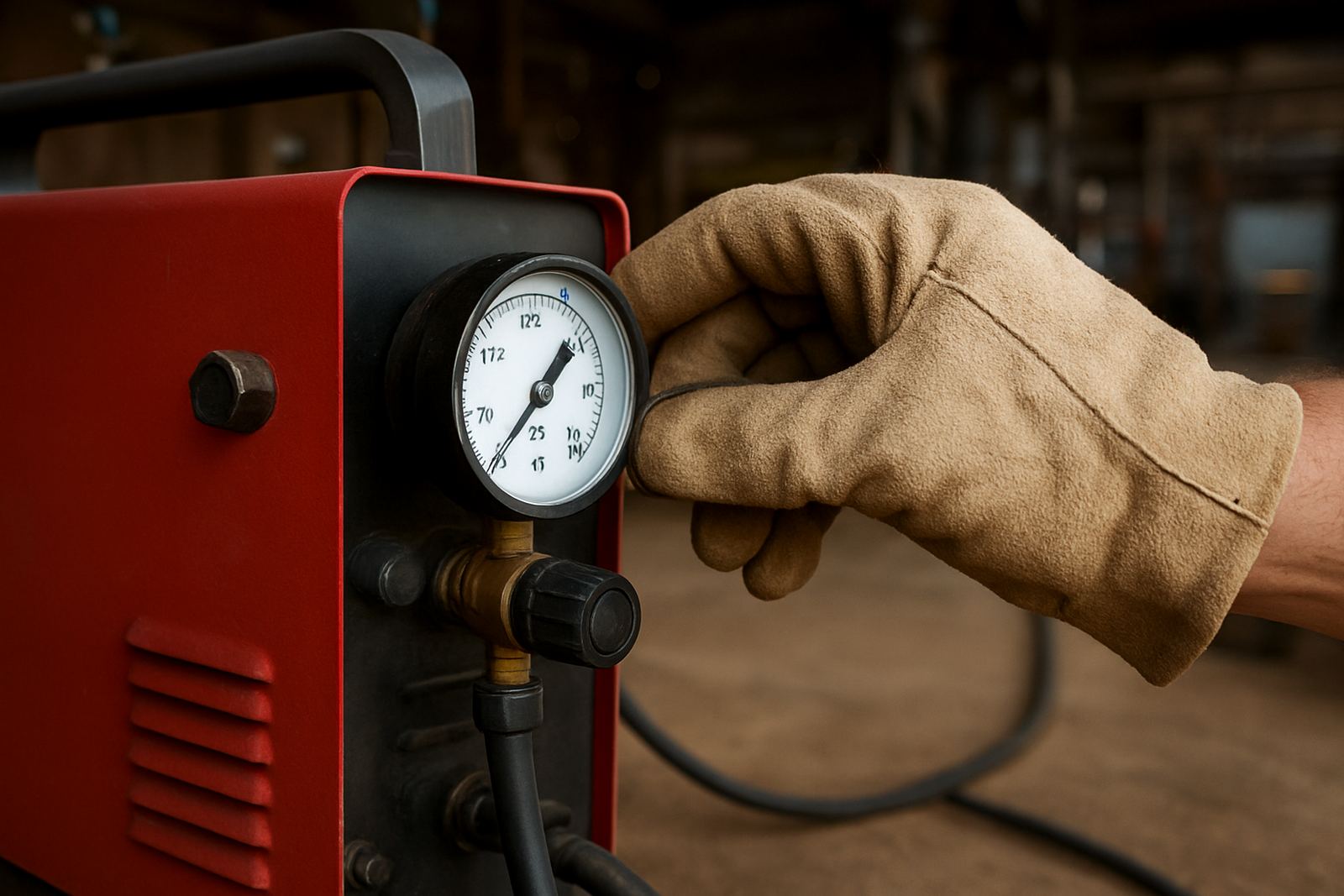
It is common to set pressure at the compressor tank and assume the torch is getting the same value. In practice, pressure drops through regulators, filters, couplings, hoses and fittings. A torch that is meant to run at 5.5 bar may only receive 4.8 bar if the system is undersized or blocked.
Start at the air source and work forward. Look for water in the bowl, oil mist, damaged hoses and restricted quick couplers. If the line is too long or the hose diameter is too small, the machine may starve for air whenever the torch is under load. That shows up as inconsistent cuts and frequent tip changes.
- Drain compressor moisture daily, especially in coastal humidity or after rain.
- Replace clogged filters before they start choking flow.
- Check for leaks at couplers, joints and regulator seals.
- Use the hose size the machine was designed for, not the nearest available one.
- Keep the air line as short as practical between the compressor and cutter.
A quick field check can save a long breakdown call. If the pressure looks right but the cut does not, test the air at the torch end while the machine is running, not only at the tank.
Set pressure to the machine and the cut you want
There is no single pressure setting for every plasma cutter. The correct value depends on torch type, amperage, cut speed and the thickness of the steel. A light handheld machine may run well at one setting, while a heavier CNC unit needs a different pressure profile for piercing and cutting.
Always follow the machine plate or operating guide first. After that, make small adjustments and inspect the edge. You are looking for a steady arc, a narrow and even kerf, and a cut face with minimal slag. If you are cutting 6 mm plate in a fabrication shop in Vanderbijlpark, the pressure that works for 3 mm sheet may be too low to keep the arc stable through the thicker material.
Watch for these signs when pressure is not correct:
- Arc sputtering or flickering during the cut
- Excess dross at the bottom edge
- Overheated consumables after short use
- Hard starts or delayed pilot arc transfer
- Excessive bevel on one side of the cut
It helps to make a simple log for each machine. Note the material thickness, amperage, air pressure and cut result. Over time, this gives you a proper setting record for repeat work, which is useful when orders keep changing between mild steel, stainless and worn plate.
Dry, clean air is as important as pressure
Pressure alone will not fix dirty air. Water and oil carry through the line and damage the torch internals, swells seals and shortens consumable life. In practical terms, a cutter running on damp air often starts well for the first few cuts then gets worse as the torch heats up.
For workshops in Gauteng and the Free State, air quality needs regular attention. Daytime heat followed by cool evenings creates condensation inside tanks and hoses. If the compressor is older or used across several machines, the moisture load can rise quickly. That is one reason preventive maintenance matters as much as setting the regulator.
- Drain the tank before and after shifts if the machine is working hard.
- Service dryers and filters on schedule, not only when a fault shows up.
- Keep the compressor intake away from grinding dust and oily mist.
- Inspect the torch air inlet for contamination during consumables checks.
If the cut edge suddenly turns rough after a period of decent performance, do not only adjust amperage. Check the air first. In many cases, the cause is moisture in the system or a failing filter element.
What operators should look for during a test cut
A test cut is the quickest way to see whether the air setting is correct. Use the same material type and thickness you cut most often, then inspect the result straight away. If the torch is set properly, the cut should start cleanly and stay consistent from top to bottom.
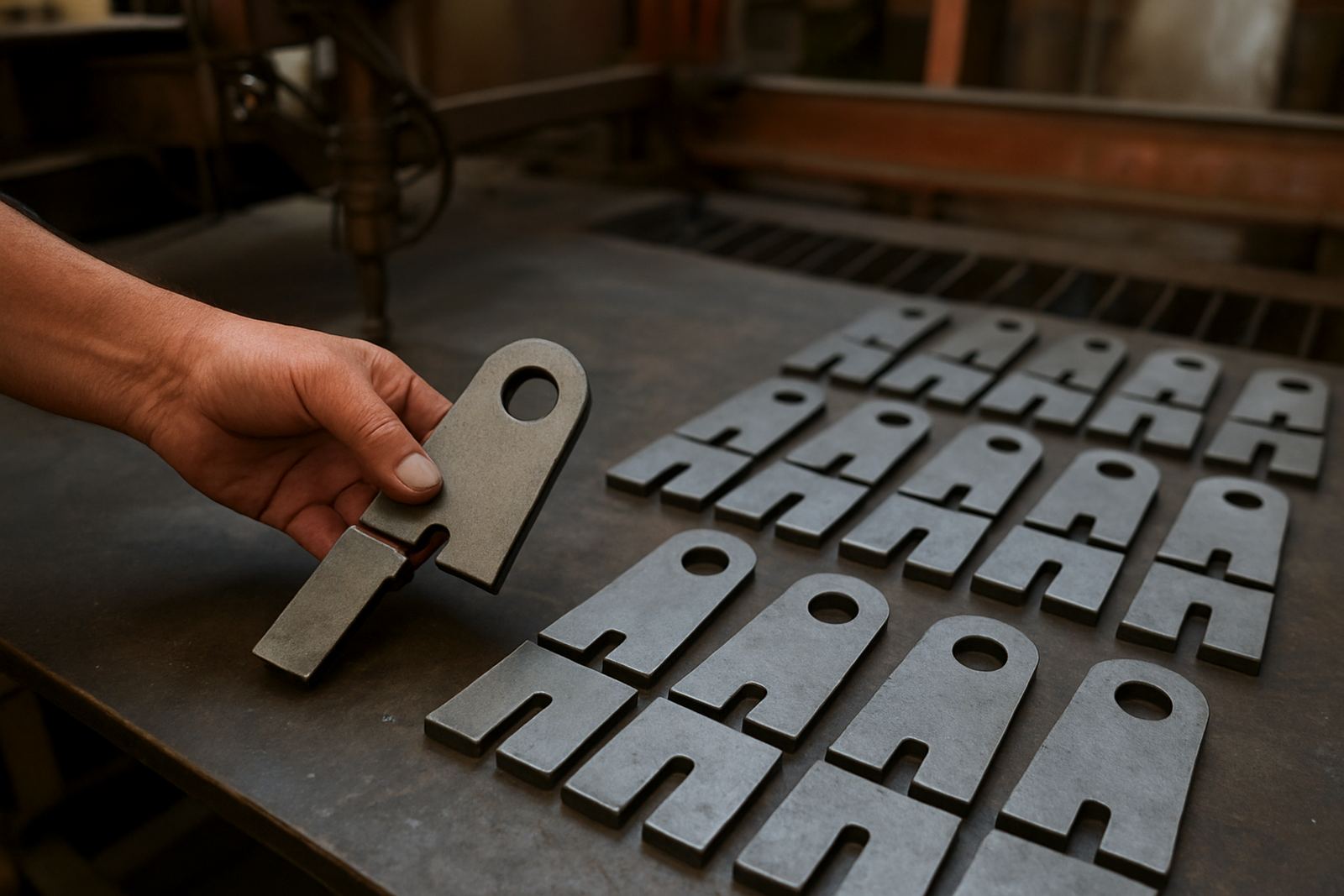
For handheld work, a good test cut should leave a clear, sharp edge with little cleanup needed. For CNC tables, the edge should be square enough that the part can go straight to bending, welding or assembly. If you need to grind every edge, the air setting may be off or the system may have restrictions in the line.
When checking the result, pay attention to the following points:
- Top edge: should be sharp, not heavily melted back
- Bottom edge: should have little to no hanging slag
- Cut angle: should stay even from start to finish
- Sound: the arc should remain steady, not pulse or hiss irregularly
- Heat: the torch should not feel excessively stressed after a normal run
On a busy site, one operator may not notice a slow decline in air performance because the job still gets done. A second set of eyes during a cut quality audit often catches the issue earlier.
When pressure problems point to a servicing issue
If you keep adjusting the regulator and the cut still misbehaves, the machine may need servicing. A worn seal, damaged torch lead, blocked nozzle path or faulty height control can all look like pressure trouble at first. The same applies to CNC tables with dirty air lines or poor height calibration.
This is where a proper inspection saves money. A technician can check torch repairs, power source condition, air system performance and consumable wear as one job instead of chasing each fault separately. That matters when breakdowns happen on site and production is waiting.
We often see machines in Vereeniging, Alberton and Bloemfontein that have been run on marginal air for months. The operator keeps turning the knob, but the real problem is a small leak, a blocked filter or a compressor that cannot keep up during peak demand. Fixing the source gives you steadier arcs, better edges and fewer stoppages.
If your cutter is missing clean starts, leaving slag or chewing through tips too fast, the air setting should be checked alongside the full air path and torch condition. In many workshops that is the difference between constant rework and a machine that cuts the same way all week.