Start with the air supply before you touch the torch
In many Vereeniging and Vanderbijlpark workshops, poor air quality is the first reason a plasma machine will not strike properly. A cutter needs clean, dry air at the correct pressure, and even a small amount of water or oil in the line can cause weak starts, sputtering, or a torch that lights once and then dies. After load shedding, compressors are often restarted in a hurry and moisture gets pushed into the line, so it is worth checking the basics before assuming the machine is faulty.
Look at the pressure gauge while the torch is triggered, not only when the system is idle. If pressure drops too far under load, the machine may try to start and then fail to maintain the arc. On longer air lines, especially in bigger premises around Alberton or Sasolburg, the loss through fittings, filters, and worn hoses can be enough to cause trouble.
- Drain water traps and filter bowls before the first shift.
- Check that the compressor is delivering the pressure recommended for the torch set-up.
- Inspect hoses for leaks, kinks, and loose couplings.
- Confirm the air is dry enough for consistent cutting, especially in humid coastal conditions if a machine has been moved from inland storage.
Consumables wear out sooner than most operators expect
A plasma cutter can look fine from the outside while the consumables are already past their useful life. Worn electrodes, clogged nozzles, and damaged swirl rings can stop the arc from starting cleanly or make it wander as soon as it strikes. If the machine only starts after several attempts, or if the torch makes a popping sound and leaves a rough edge, the consumables should be checked first.
It is common for operators to keep using parts that have already lost their shape because the machine still cuts, just not properly. That leads to more heat in the torch head, more spatter, and more wear on the rest of the system. In a busy metal fabrication shop, a few extra minutes spent on inspection can save a lot of downtime later.
- Replace electrodes and nozzles as a matched set where possible.
- Check for burn marks, oval holes, or heat damage inside the torch tip.
- Make sure the retaining parts are tightened correctly, but not over-tightened.
- Keep spare consumables on hand for jobbing work and emergency repairs.
Earth return and work clamp problems cause false starts
If the torch fires and immediately cuts out, the work clamp or earth return is often to blame. The machine needs a solid electrical path back to the power source. Paint, rust, mill scale, grease, or a clamp placed on a small contact area can all interrupt that path. On site jobs in Meyerton or Germiston, this gets overlooked when the job is urgent and the metal still looks clean enough at a glance.
Check that the clamp bites into bare metal and that the cable is intact all the way through. A cracked clamp, loose lug, or damaged cable can create the sort of intermittent fault that is hard to trace. If the fault only happens on some pieces but not others, the issue may be the workpiece surface rather than the machine itself.
For CNC tables, make sure the table sections, slats, and return connections are clean and properly maintained. Build-up under the material can interfere with start performance and cut quality, especially on repeated production runs.
Power supply dips, extensions, and generator issues
Starting faults are not always inside the plasma machine. In Gauteng and the Free State, unstable supply, long extension leads, and undersized generators can all affect arc initiation. A cutter may appear to power up normally, then fail as soon as the torch is triggered because the input voltage drops under load. This is common on temporary sites, in yards with heavy equipment sharing the same supply, or during load shedding when a generator is brought in for short-term use.
Long cable runs add resistance and can cause the machine to struggle, particularly if the cable is thin or coiled while in use. If the machine is fed from a generator, the output must be suitable for the cutter’s demand, not just the lights and grinders on site. The symptoms are usually consistent: slow fan response, unstable start, or the arc cutting out when current rises.
- Use the correct supply cable length and thickness for the machine.
- Avoid running the cutter from the same outlet as heavy start-up equipment.
- Check generator capacity and stability before a job starts.
- Inspect plugs, sockets, and extension joins for heat damage or looseness.
Torch condition and lead damage can hide the real fault
When a torch lead is bent, pinched, or damaged near the handle, the problem may only show up when the operator moves into a certain position. That makes it look like the machine has an intermittent starting fault, when in fact the signal is being lost in the torch cable. Internal wear in the trigger switch or start circuit can also create a delayed or failed start, especially on handheld units used daily in fabrication and repair work.
Check the full length of the torch lead, including the strain relief points and any places where it passes over a sharp edge. The torch body should feel secure, not loose or overheated. If the issue changes when the lead is moved, that is a strong sign of cable damage or a weak connection.
It is also worth checking whether the torch is the correct type for the power source. Mixing parts that do not match can lead to poor arc start, unstable cutting, and unnecessary wear on the torch head.
When to call for servicing instead of chasing the fault
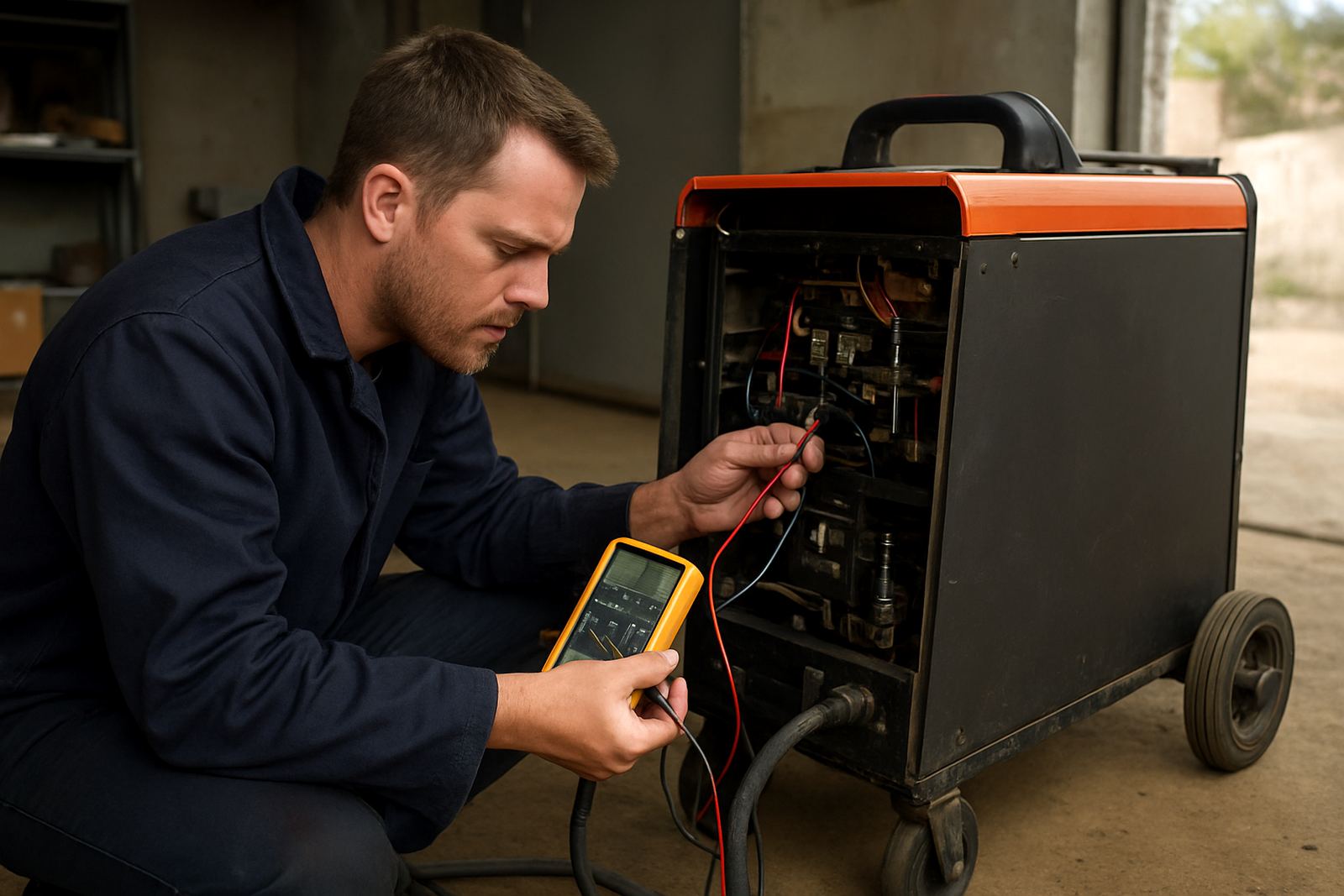
Some problems are solved with a new nozzle, a clean filter, or a tighter earth clamp. Others need proper fault finding. If the machine trips repeatedly, blows consumables too quickly, or starts only after repeated attempts despite clean air and good connections, the power source or internal control circuit may need attention. That is the point where a trained technician can save time and prevent further damage.
Across Vereeniging, Sasolburg, Bloemfontein, Welkom, and the surrounding areas, PlasmaCutter supports workshops and site teams with torch repairs, power source repairs, preventive maintenance, CNC table servicing, height control calibration, on site breakdowns, machine commissioning, operator training, spares supply, cut quality audits, consumables checks, and air system inspection. A proper service visit can identify whether the fault is electrical, mechanical, or air related, rather than leaving the operator to guess.
For teams working under pressure, the practical rule is simple: if the same starting fault keeps coming back after the basic checks, stop cycling the machine and get the system tested. Repeated start attempts can make a small fault worse.
A simple field check can save a full shift
For a local example, a small fabrication team in Sasolburg may arrive on site after a power interruption and find the cutter will not strike. If the compressor has moisture in the line, the work clamp is sitting on painted steel, and the extension lead is long and coiled, the machine can look faulty when three separate issues are actually working together. Once the air is drained, the clamp is moved to bare metal, and the supply is checked properly, the cutter often comes back to normal.
The lesson is to work through the problem in the same order every time: air, consumables, earth return, then power supply and torch condition. That process keeps fault finding practical and avoids unnecessary part swaps. It also helps operators learn what the machine is telling them before a small starting issue becomes a lost day.