Why downdraft extraction matters at the cutting line
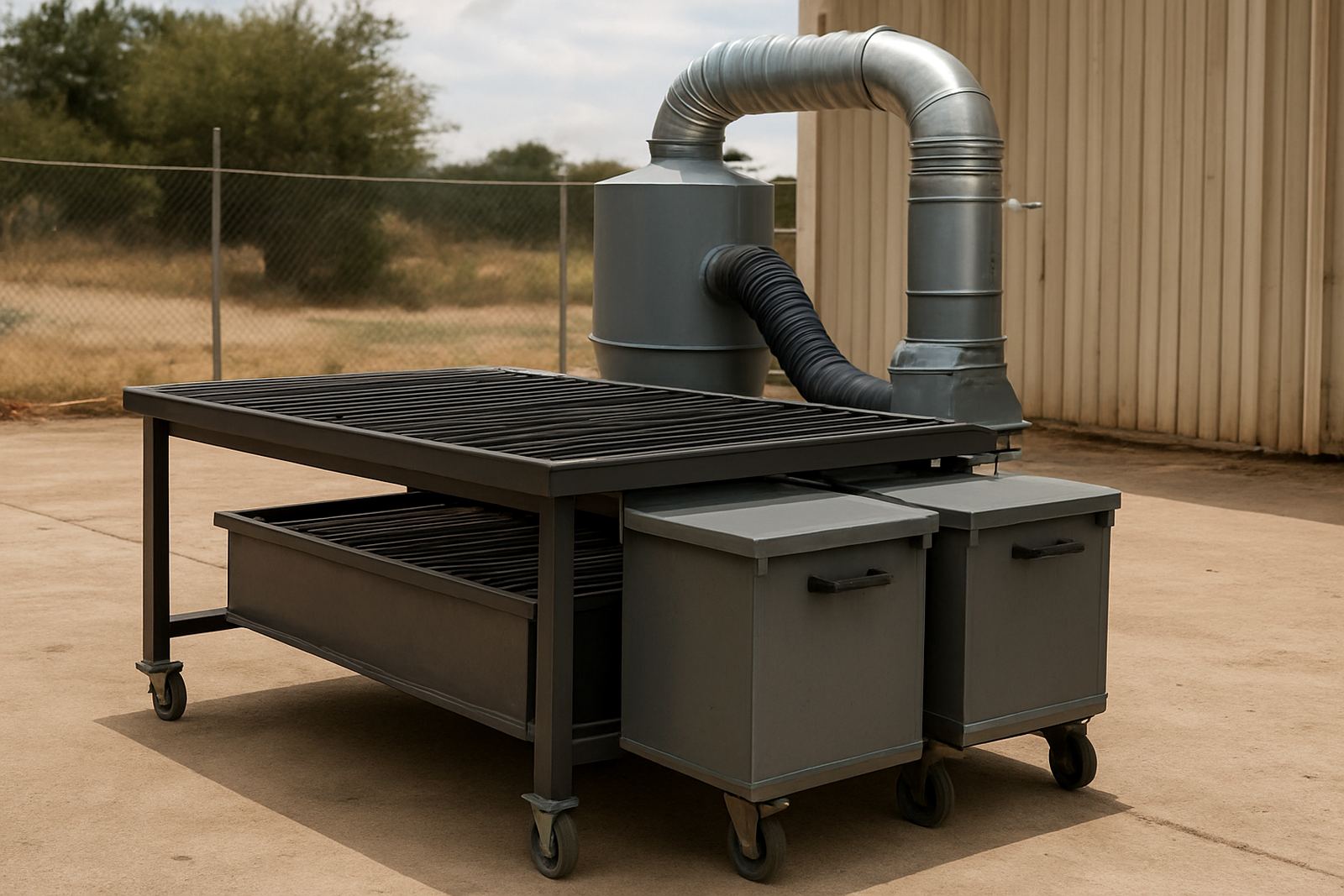
When cutting steel or other sheet material, fumes and fine dust do more than dirty the floor. They cloud the operator's view, settle on nearby parts and make housekeeping harder at the end of the shift. A downdraft table pulls air downward through the cutting surface, which helps move smoke and debris away from the cut line instead of letting it drift across the shop.
That cleaner airflow is useful in busy fabrication shops, automotive repair bays and light industrial plants where parts are cut all day. In Vereeniging and nearby towns, many workshops also work with doors open to cope with heat, so airborne dust can move around quickly. A downdraft setup gives you more control over where that mess goes.
Cleaner visibility means better cut control
Cut quality is easier to manage when you can actually see the kerf, the edge and the torch path. On a smoky table, operators often slow down or guess their position because the cut zone is hidden. With better visibility, the operator can follow the line more accurately and catch issues early, like poor pierce placement or excess dross.
That also helps when doing repeat work. A clear view makes it easier to hold consistent standoff and keep movement steady, which matters on both handheld and CNC jobs. If you are cutting brackets, gussets or repair panels, even small improvements in visibility can save rework later.
- Less smoke around the cut line
- Quicker checking of edge quality
- Better control on small or detailed parts
- Reduced need to stop and wipe surfaces clean
Less cleanup time at the end of the shift
One of the most practical benefits is how much less material ends up across the floor and benches. Fine slag, dust and burnt residue collect below the table instead of spreading through the workshop. That means less sweeping, less vacuuming and fewer places where grit can get into moving machine parts.
For small teams, this matters because cleaning time cuts into production time. It also helps where multiple trades share one bay. A cleaner floor is safer for walking, trolley movement and part handling, and it keeps consumables and finished work from picking up grime. Over a week, that difference is easy to see.
A better fit for South African workshop conditions
Local conditions can be hard on cutting equipment. In Gauteng, dust from surrounding yards and windy days often gets pulled into open work areas. In the Free State, dry air can carry fine particles across benches and into electrical cabinets. In coastal or humid locations, residue can mix with moisture and stick to surfaces, which makes cleaning even harder.
A downdraft table supports better housekeeping in all of those conditions. It helps reduce the amount of airborne debris that settles on rails, guides, torch heads and control panels. That can be especially useful where load-shedding interrupts the working pattern and crews need to restart quickly without spending half an hour cleaning up first.
- Helps keep guide rails and moving parts cleaner
- Reduces dust on cables, clamps and control boxes
- Supports neater changeovers between jobs
- Useful in open workshops with cross-ventilation
Safer day-to-day handling for operators
Cleaner air and better visibility support safer work habits. Operators can see the material edge more clearly, which helps when positioning the torch or checking the cut path. The table also helps pull some of the smoke away from breathing height, although proper workshop ventilation should still be part of the setup.
It is worth remembering that a downdraft table is not a substitute for training or safe operating practice. Operators still need the right PPE, stable workpieces and correct amperage settings for the material thickness. But as part of a proper cutting area, it makes the job easier to manage and can reduce avoidable slip ups.
How local fabrication shops use it in practice
A fabrication shop in Vanderbijlpark might run a mix of repair plates, stair parts and one-off brackets. Without extraction, the cutting zone can get smoky fast, especially on thicker material. With a downdraft table, the operator sees the cut line better and the offcuts do not build up as quickly around the work area.
The same applies in Sasolburg or Bloemfontein where workshops often need to keep bays tidy for multiple jobs at once. A downdraft table lets a team cut, move the part on and keep the rest of the area cleaner for welding or assembly. That kind of workflow is not fancy, it is just practical.
What to check before choosing a downdraft setup
Before you commit to a table or integrate one into an existing cutting area, check the basic operating needs. Airflow, table size and access for cleaning all matter. A table that is too small for the typical sheet size will become awkward quickly, while poor airflow can leave smoke hanging around instead of moving down through the bed.
It is also wise to look at maintenance access. Tables collect slag and dust underneath, so the system must be easy to empty and inspect. If you already run CNC equipment, think about whether the extraction arrangement matches your height control, slats and part handling. A well matched setup saves time every day, not just on paper.
- Match table size to your common sheet sizes
- Check airflow requirements for your cutting volume
- Allow space for slag removal and cleaning
- Make sure operator access stays comfortable