
What CNC table servicing covers
Our CNC table servicing focuses on the parts that affect cut accuracy, repeatability and day-to-day reliability. That includes the table frame, linear rails, drive components, gantry movement, height control setup, torch alignment, limit switches, cable management and the air delivery side that supports clean plasma cutting. We check for play, binding, contamination, corrosion and wear before they turn into missed cuts or costly machine stops.
For workshops in Vereeniging, Vanderbijlpark, Sasolburg, Meyerton, Alberton, Germiston, Bloemfontein and Welkom, we see a few common issues over and over: dust build-up, moisture in airline systems, misaligned rails, loose fasteners and poor housekeeping around slat beds. On coastal jobs humidity can shorten the life of consumables and electrical parts, while inland sites often struggle more with dust and voltage dips during load-shedding. A proper service deals with the machine as a whole, not just one symptom.
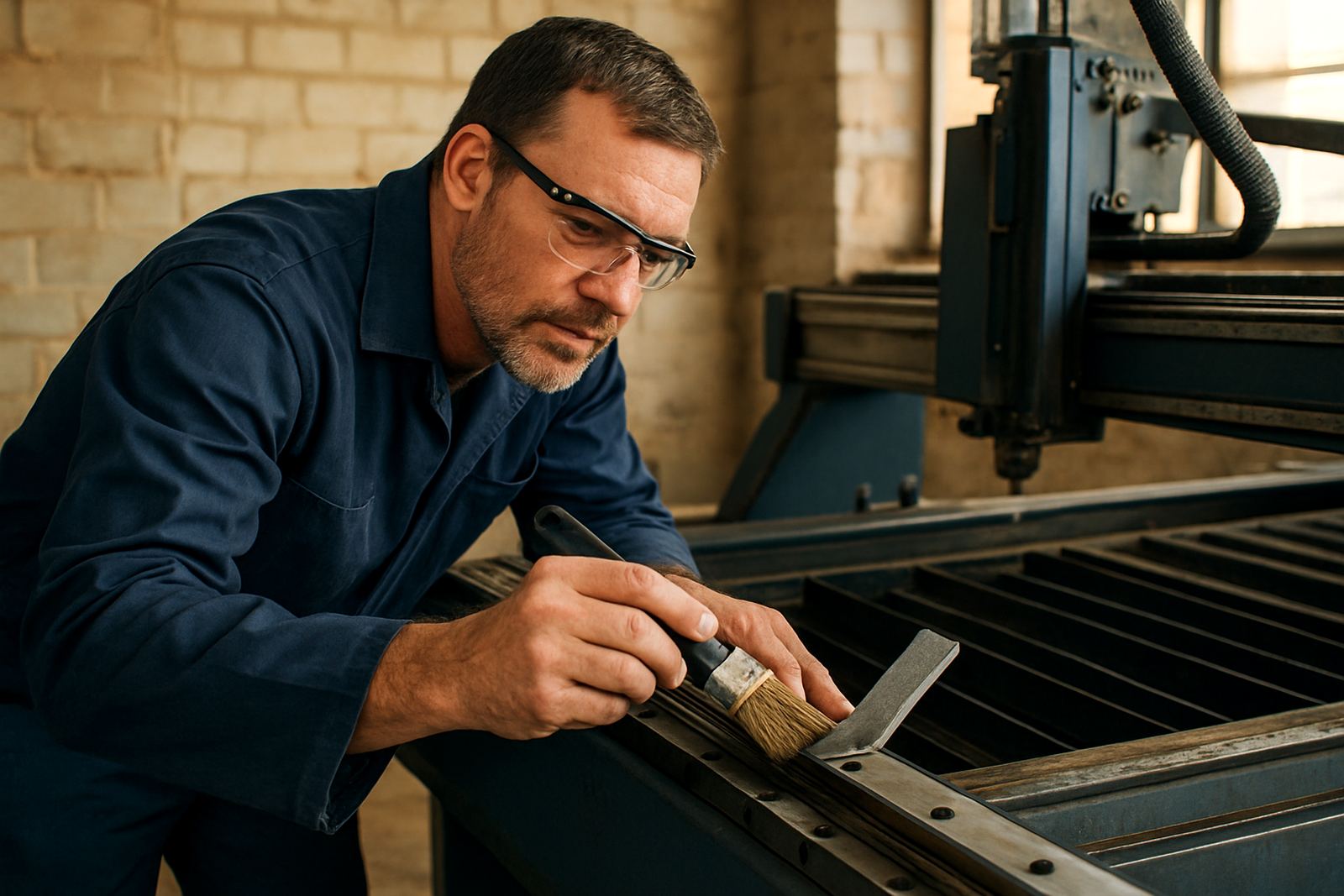
- Rail inspection, cleaning and alignment checks
- Drive system inspection for backlash, wear and smooth travel
- Table squareness, level and gantry movement checks
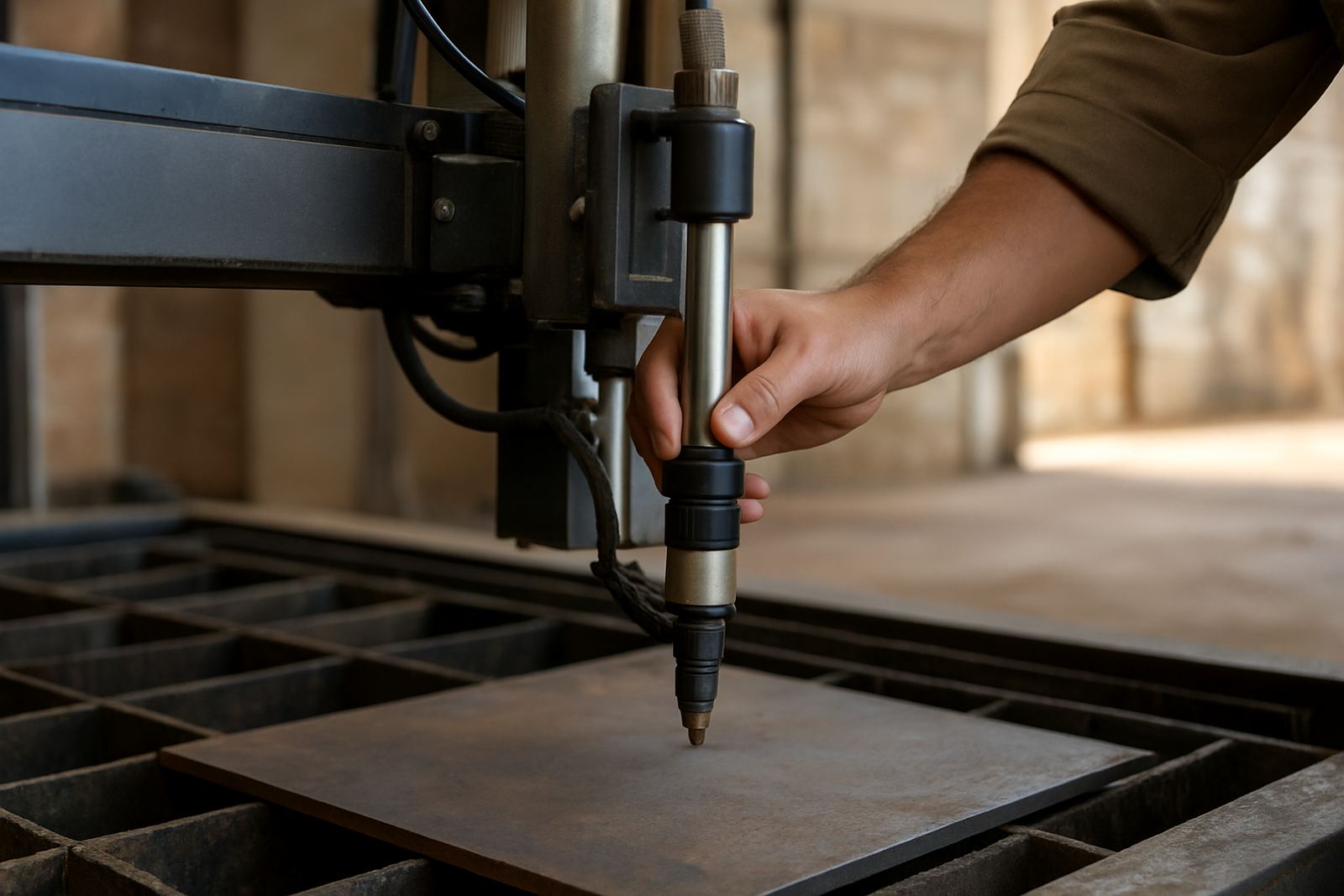
- Height control calibration and torch positioning checks
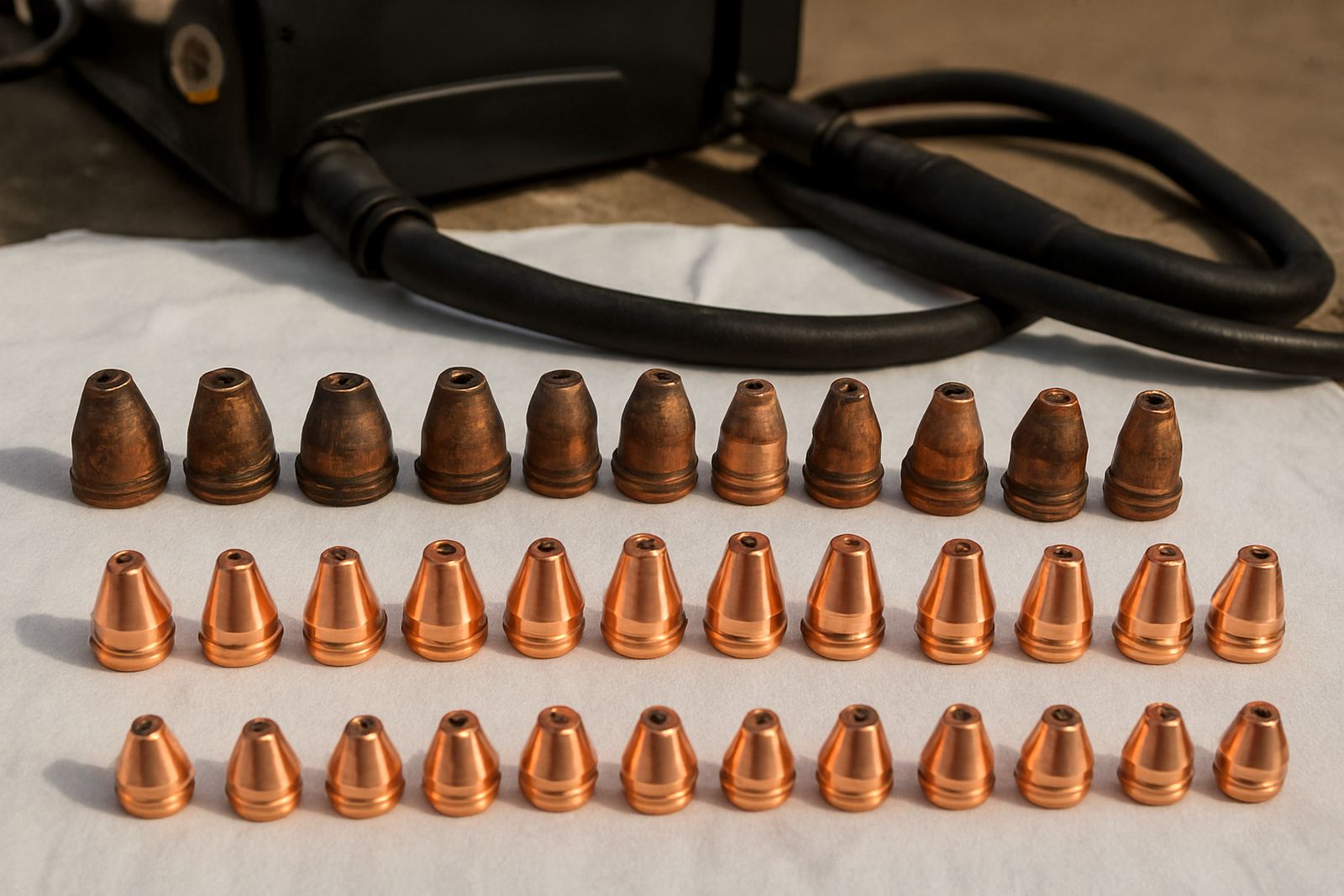
- Air quality checks for moisture, pressure and filtration
Our servicing process from inspection to sign-off
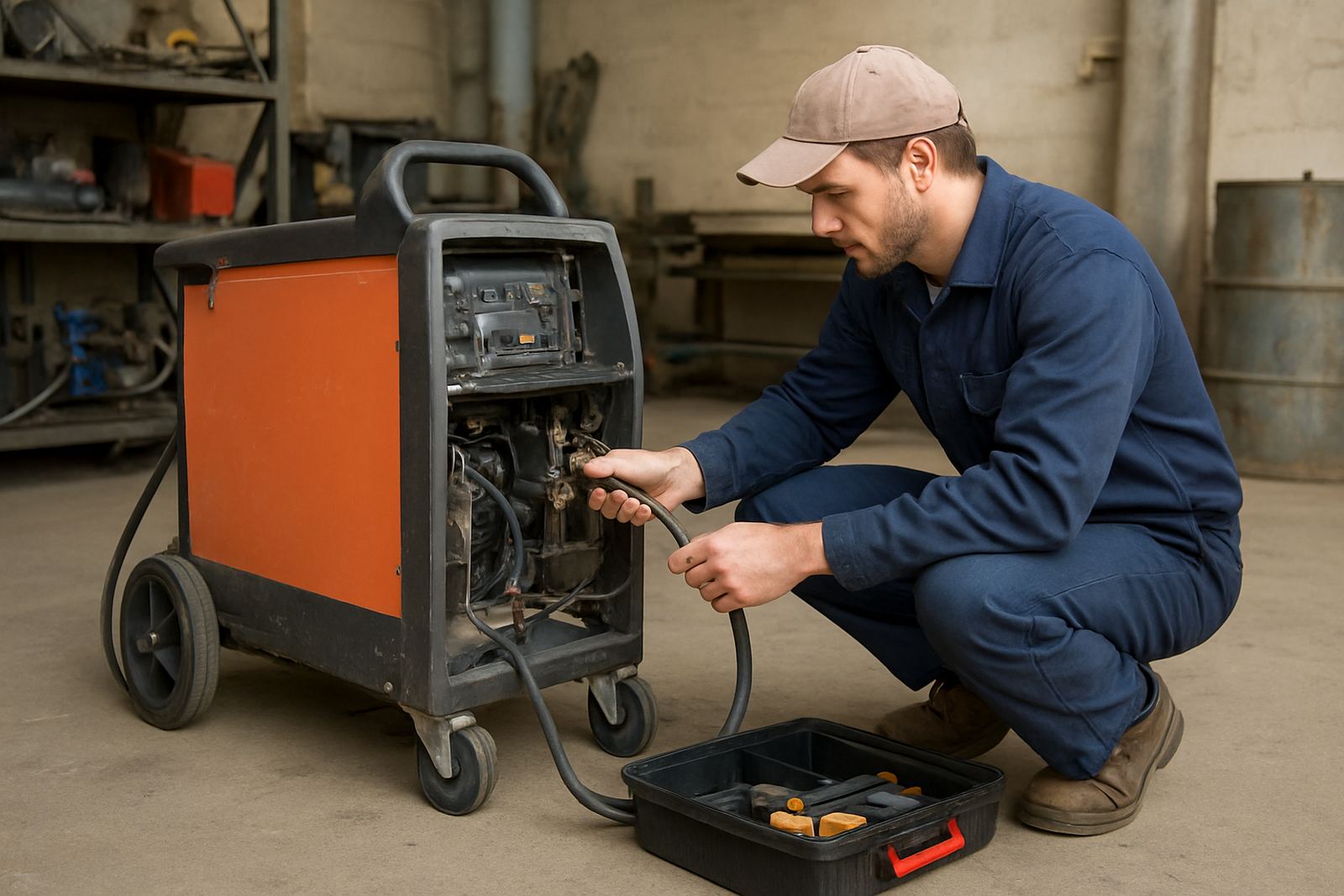
Every service starts with a visual and mechanical inspection. We look at the machine state, speak to the operator or supervisor about any problems seen during production, then test the table under normal movement. If the machine has been drifting, pausing, losing height or showing rough travel, we measure the fault rather than guessing at it.
After that we clean the relevant assemblies, tighten and recheck fixings, inspect motion components and test the air supply. Where needed we carry out height control calibration, limit switch checks, torch stand alignment and basic controller verification. If a part is worn beyond service limits, we flag it before it causes further damage. That saves time and avoids repeat call-outs.
- Initial inspection and fault discussion on site or at our base
- Mechanical cleaning, adjustment and lubrication where applicable
- Calibration and operational testing under real cutting conditions
- Final check with the operator and a clear service summary
We keep the process practical. You get direct feedback on what was found, what was corrected, and what still needs attention. No unnecessary work, just the steps that keep the table working properly.
Typical turnaround times and site support
Turnaround depends on the condition of the table, the size of the machine and whether the work is done on site or at our Vereeniging base. For routine inspections and preventive servicing, many jobs can be handled within a short booking window. For tables with worn parts, damaged wiring or repeated alignment issues, we may need extra time for diagnosis and parts supply.
We support sites across Gauteng and the Free State, including mixed production environments, small fabrication shops and larger cutting operations. If production cannot stop for long, we plan the work in stages so the machine can be returned to service as quickly as possible. On site breakdown support is available when a machine is down and the cause needs hands-on attention.
- Routine service visits for planned maintenance
- On site diagnosis and corrective adjustments
- Table commissioning after installation or relocation
- Operator handover after testing and calibration
Where a table has been idle for a while, we allow extra time for seizure, corrosion or control faults. In humid areas or sites with poor air preparation, the inspection may also include more detailed cleaning because moisture and dust can affect both motion and cut quality. We prefer to fix the cause rather than patching the symptom.
Pricing approach that fits the machine condition
Our pricing is based on the actual condition of the CNC table, the scope of work and the level of access required. A light service on a well-kept machine costs differently to a table with worn rails, electrical faults or badly maintained air systems. We quote after we have enough detail to understand the job properly, so the price matches the real work.
For many customers, the best value comes from planned preventive servicing rather than waiting for a breakdown. That spreads maintenance cost through the year and reduces the chance of lost production, scrap material and emergency call-outs. It also helps with budgeting, especially when the workshop is carrying several machines and power interruptions are still part of the week.
- Inspection-based pricing for routine and corrective servicing
- Clear labour and parts breakdown where replacements are needed
- Options for on site work or workshop-based servicing
- Preventive maintenance plans for regular production environments
We do not load the job with extras that add no value. If the machine only needs calibration and cleaning, that is what we quote. If a drive component or sensor needs replacement, we explain why and give the cost before the work goes ahead. That way you can make a decision with proper figures in front of you.
Recommended maintenance intervals for plasma tables
How often a CNC table should be serviced depends on running hours, cutting environment and how well the machine is kept between shifts. A busy shop cutting daily in dusty conditions will need closer attention than a lighter-use machine in a clean bay. For most users, regular checks on motion, air quality and height control stop small errors from building up.
As a guide, we recommend a basic operator check every shift, a preventive inspection at planned intervals and a fuller mechanical service when the table starts showing any loss of accuracy. If you cut through the week and run hard on Mondays after a weekend stop, pay extra attention to condensation, rail contamination and start-up settings. There is a reason so many machines complain after a wet, cold morning or a power cut.
- Daily: clear slag, check slats, inspect air pressure and look for abnormal noise
- Weekly: check rail condition, fasteners, cable routing and torch position
- Monthly or quarterly: service depending on duty cycle and environment
- After any move, installation or major fault: full recheck and calibration
In our experience, tables that are serviced before they start drifting last longer and cut better. It is the same with air lines and height control systems. If you wait until the cut quality drops badly, you are already losing time and material.
Book CNC table servicing from our Vereeniging base
Send your CNC table servicing enquiry through the contact page form, and include the machine details, the fault and whether it is on site or at our base. If you need a routine service, commissioning support or help with a table that is cutting out of square, tell us the machine size, the fault symptoms and whether it is on site or at our base. That gives us enough detail to prepare properly.
We service plasma tables used in metal fabrication, automotive work, repair shops and general production. Whether the machine is a compact workshop unit or a larger CNC installation, the aim stays the same: accurate motion, stable operation and cut quality you can repeat from one shift to the next. If your table is due for attention, it is better to plan the work now than wait for a stoppage at the wrong time.
Key facts
| Service type | Mechanical and operational servicing for CNC plasma tables, rails and motion systems |
|---|---|
| Base | Vereeniging |
| Coverage | Gauteng and the Free State, including on site visits and workshop support |
| Typical table checks | Rails, gantry, drive system, height control, torch alignment, air supply and limit switches |
| Maintenance intervals | Daily operator checks, weekly inspections and planned monthly or quarterly servicing |
| Turnaround | Depends on machine condition, access and parts required; urgent breakdown support available by booking |