What our consumables checks cover
We inspect the parts that carry the current and shape the plasma stream, starting with the nozzle, electrode and swirl ring or swirl part used in your torch set-up. The aim is simple: catch wear early, confirm the parts match the process, and stop poor cuts that lead to rework, extra grinding and wasted sheet. This service suits handheld units and CNC plasma tables used in workshops around Vereeniging, Vanderbijlpark, Sasolburg, Meyerton, Alberton, Germiston, Bloemfontein and Welkom.
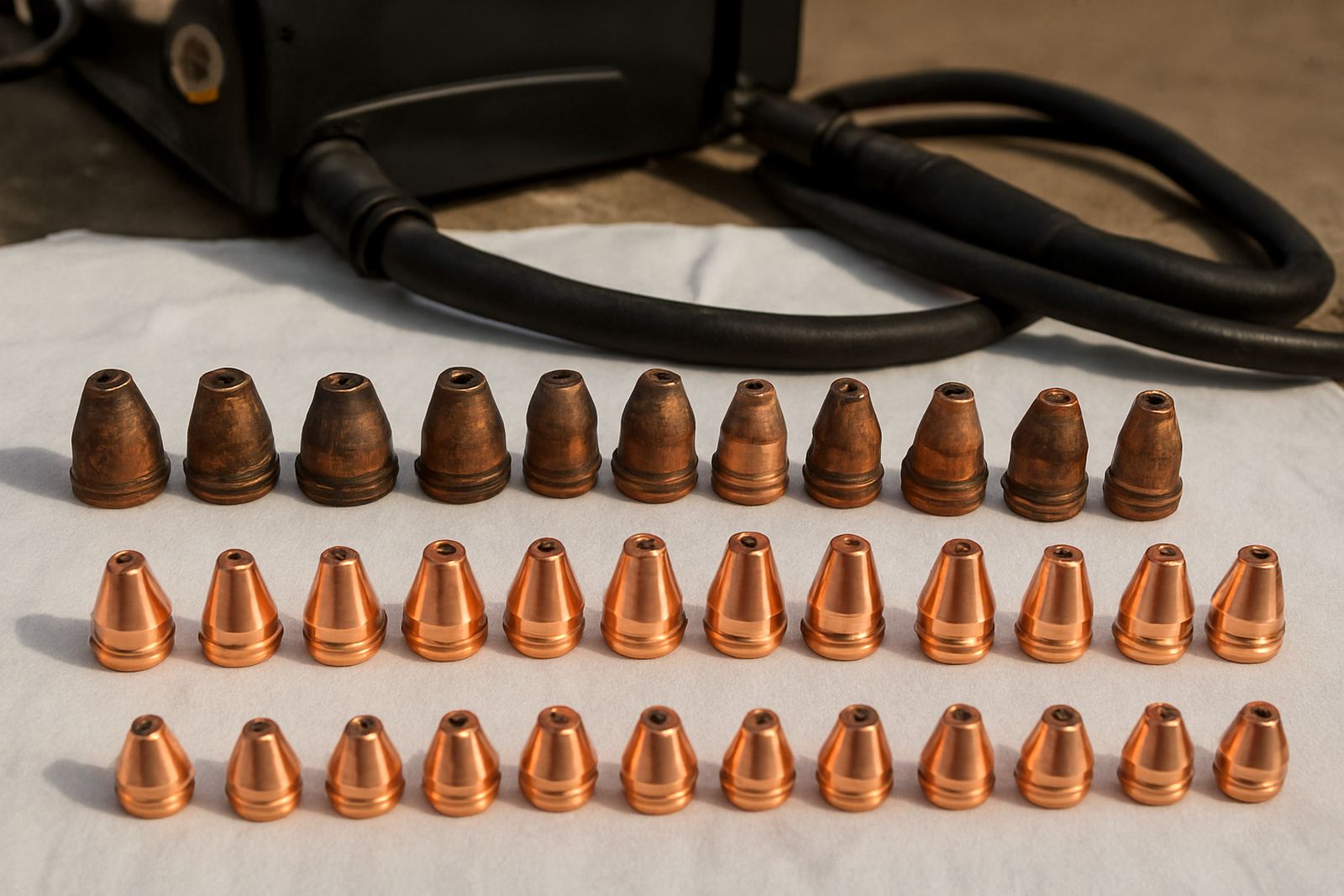
Checks are done against the actual cutting duty cycle, amperage range and plate thickness you work on, not just a quick visual glance. We look for oval nozzles, pitted electrodes, heat damage, blocked gas paths and swirl parts that have lost their shape or fit. Small changes in those parts can show up as wider kerf, more dross, angular edges or frequent double arcing. On a busy site that gets expensive fast, especially where load-shedding interrupts production and the machine gets restarted often.
- Nozzle bore condition and centre wear
- Electrode pit depth, burn marks and end shape
- Swirl part fit, crack checks and gas flow condition
- Shield cup and retaining parts for heat damage or slag build-up
- Signs of overheating from low air pressure or poor cooling air
How the inspection process works
We start by confirming the torch type, amperage setting, plate thickness and the material being cut, because stainless, mild steel and aluminium behave differently. Then we remove and inspect the consumables under light and magnification where needed. If a part is close to the service limit but still usable for lighter work, we will say so clearly and note where it should not be used. That keeps the judgement practical for production, repair work and smaller fabrication jobs.
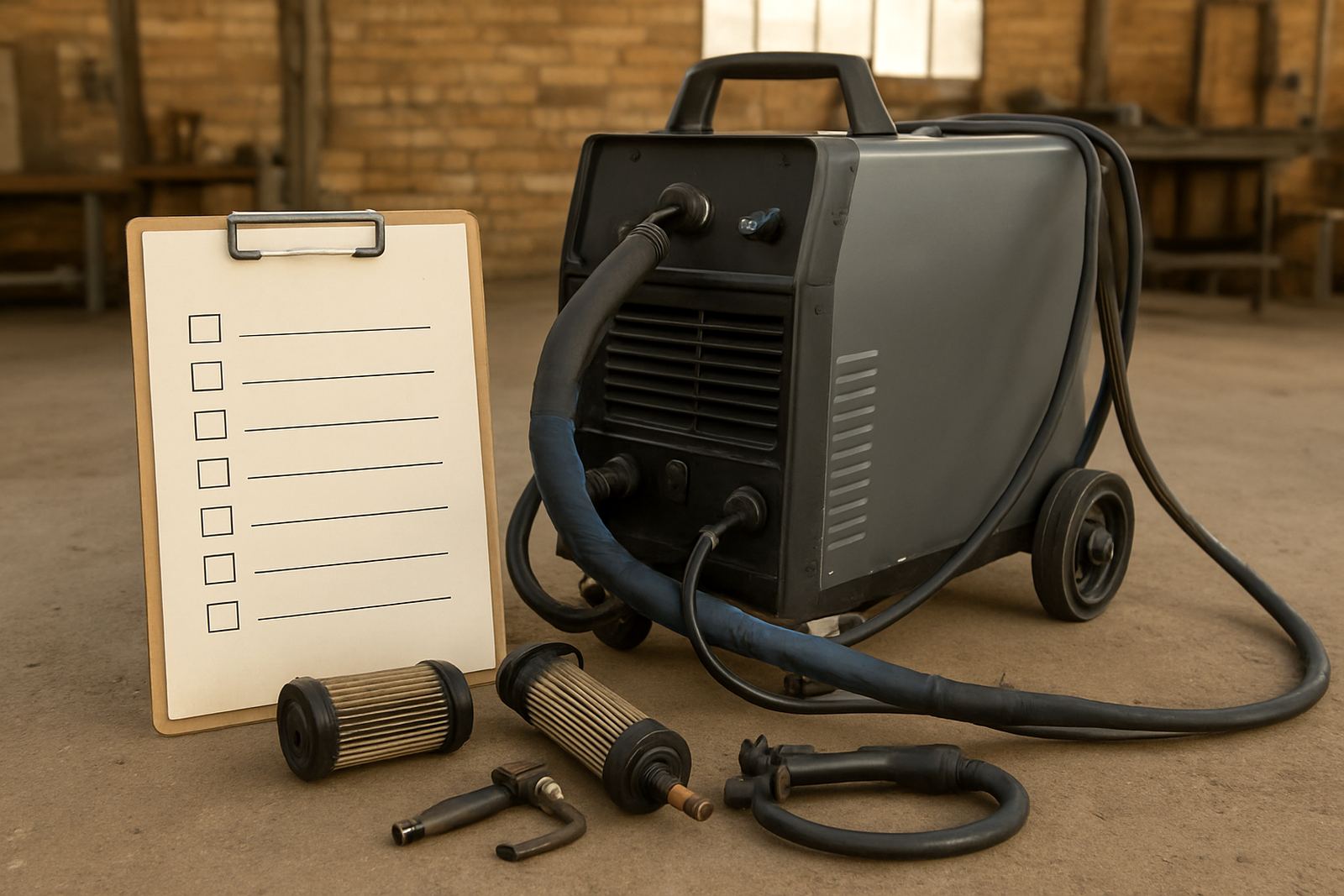
The process usually follows these steps:
- Visual inspection and fit check of all fitted consumables
- Measurement of wear where the part design allows it
- Review of air quality, pressure and moisture presence
- Checking torch hand position or CNC pierce settings if cut marks suggest misuse
- Recommendations on replacement, stock holding and operating settings
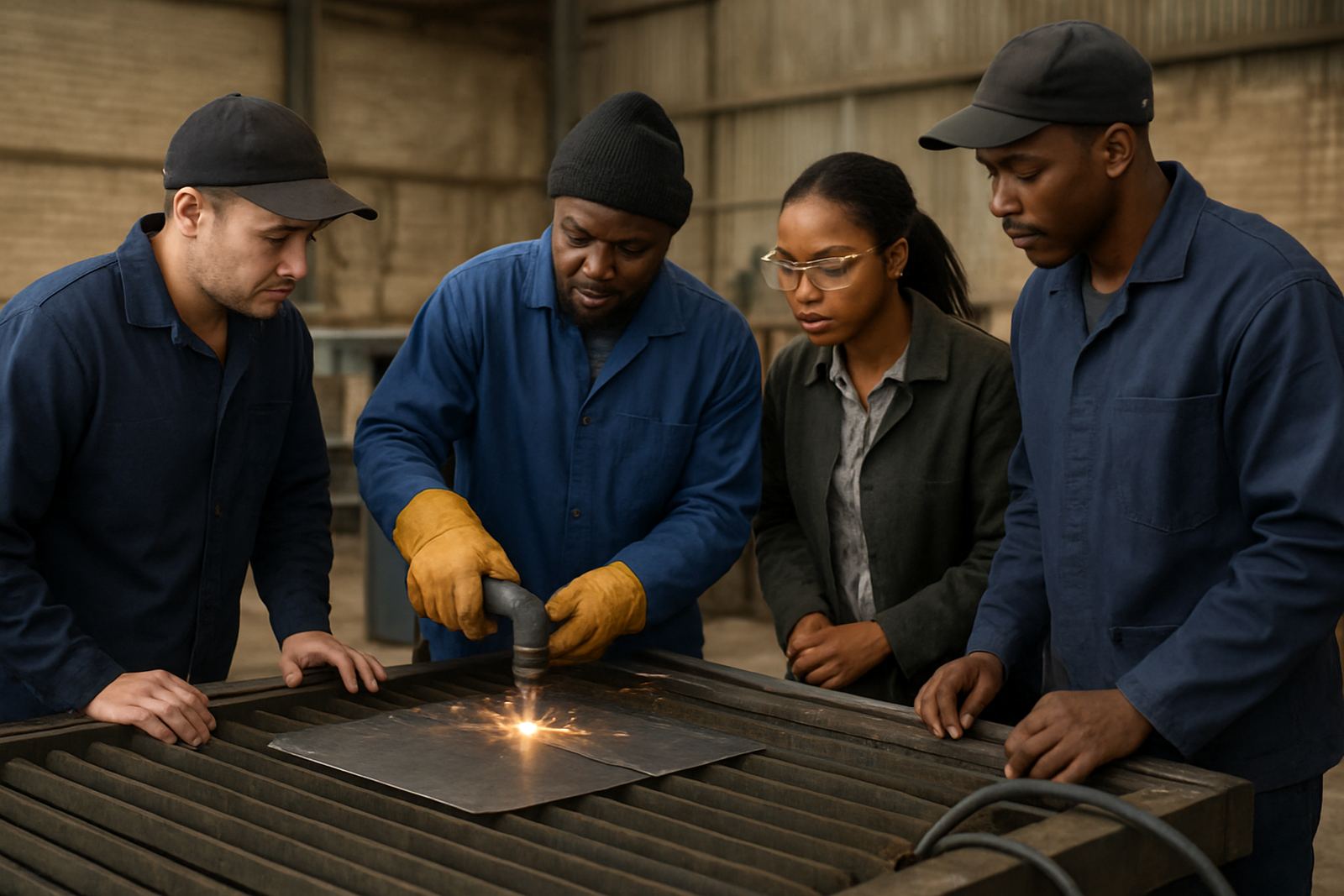
For CNC users, we also look at cut start consistency, torch height behaviour and whether the consumable wear pattern points to poor pierce height, slow travel or excessive pierce time. On handheld work we check operator handling, standoff control and whether the airflow is being restricted by dirty filters or water in the line. If the same set keeps failing too soon, the fault is often in the air system or settings, not only the parts themselves.
Signs your consumables need attention
Many operators wait until the cut looks bad enough to stop the job, but by then material is already being wasted. Consumables checks are worth scheduling when cut edges begin to angle, dross sticks harder than usual, or the machine needs more frequent restarts to get a stable arc. A torch that suddenly uses nozzles faster than before usually has an underlying cause, not just bad luck.
Common warning signs include:
- More grinding after cutting than normal
- Irregular arc starts or frequent misfires
- Excessive spatter, heavy dross or rough edge finish
- Visible heat damage on the nozzle or shield parts
- Consumables lasting far less than the expected hours
If your operation runs in a coastal or humid environment, moisture in the airline can shorten consumable life and cause poor cut starts. In inland workshops, dust and scale can build up in the torch body and retaining parts. Either way, catching wear early helps keep your parts spend predictable. A small issue with swirl parts can easily cause a bigger one by damaging nozzles and electrodes together.
Turnaround for workshop and on-site checks
Most consumables checks are handled quickly because the inspection itself is straightforward, but the benefit depends on how fast the findings are acted on. If your torch is on site in Vereeniging or nearby, we can often assess the set during a service call or scheduled visit. For workshops in Gauteng and the Free State, we also support planned demos and servicing days so maintenance does not interrupt production more than necessary.
Turnaround depends on three things: the number of torch sets, whether we are checking handheld or CNC tooling, and whether the air system or torch body shows signs of damage. A single torch set with standard consumables can usually be assessed far faster than a full production cell with multiple torches and mixed amperage ranges. Where replacements are needed, we advise on what should be held as spare stock and what can wait.
When urgent breakdowns are involved, we focus first on getting the torch back to a safe, cut-ready condition, then on the root cause. That might mean replacing a damaged nozzle set, correcting air pressure or checking the retaining parts for heat wear. If the machine has been running through load-shedding recovery cycles, we also verify whether repeated restarts have affected torch life. Some sites need this more often then they think, especially if the operator mix changes during the week.
Pricing approach and stock planning
Consumables checks are priced according to the scope of work, the number of torch sets inspected and whether the visit is workshop-based or on site. A single routine inspection costs less than a wider review that includes air quality, CNC settings and wear pattern analysis. We keep pricing practical and tied to the real time spent on the job, so you know what you are paying for before work starts.
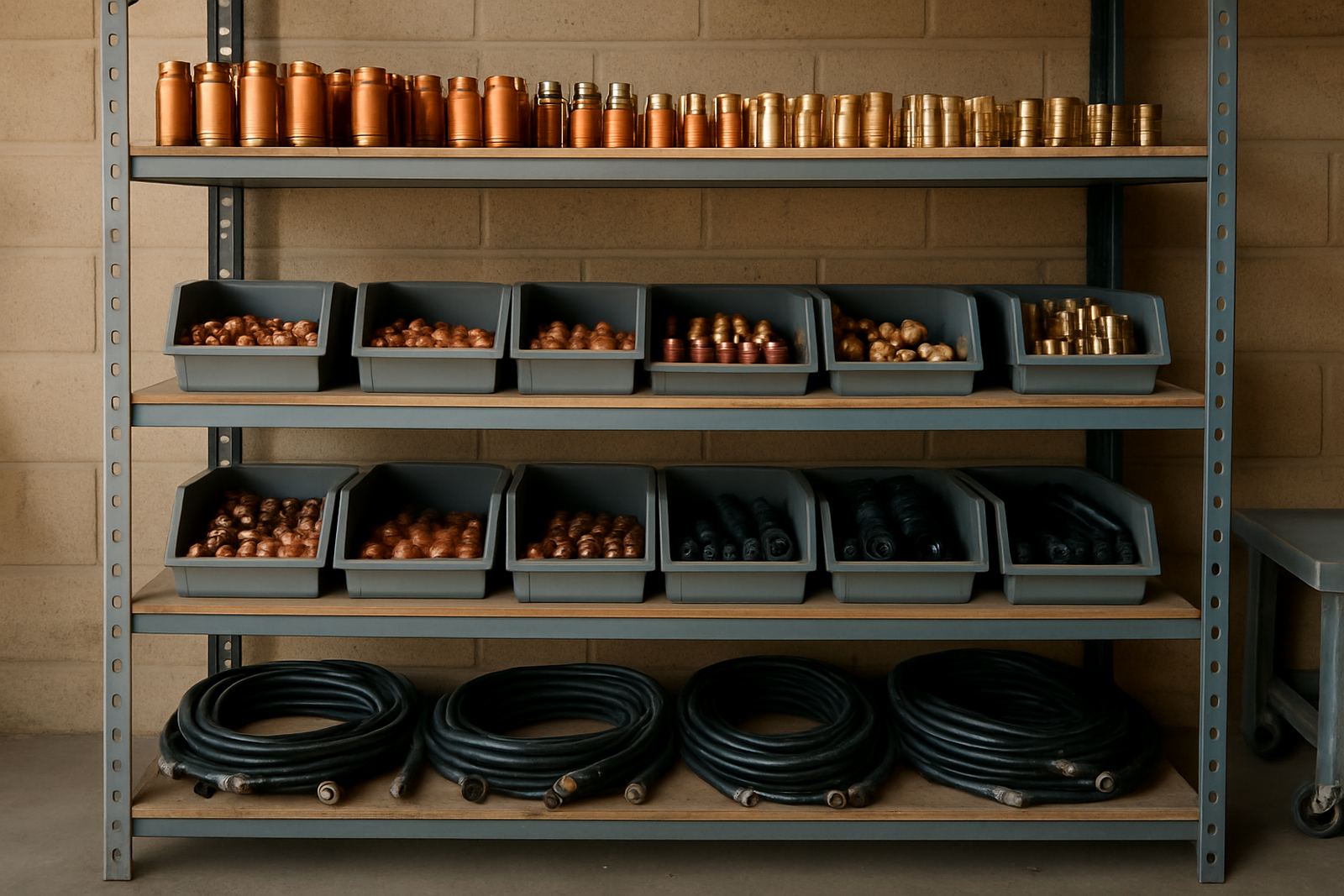
For regular users, the best cost control comes from planned checks instead of buying parts after every failure. We help you work out a replacement rhythm based on amperage, cutting hours and the material mix on your floor. That makes it easier to hold the right spares without overstocking. A good stock plan often includes:
- Extra nozzles and electrodes for the most used amperage range
- Swirl parts and shield parts for the torch model in use
- Backup retaining hardware for busy production periods
- Spare filters and moisture control items for the air line
For smaller operators, we can advise on what to keep in the cabinet for weekly work and what should be ordered only when the service life data justifies it. That keeps cash tied up lower and reduces the chance of a machine sitting idle for one missing part.
Recommended maintenance intervals
There is no single interval that suits every plasma system, because service life changes with amperage, plate thickness, air quality and operator practice. As a guide, busy fabrication shops should inspect consumables weekly, with a more detailed check every 40 to 80 cutting hours. CNC tables running multiple shifts may need shorter intervals if they cut thick plate or pierce often. Handheld units used for repairs and maintenance can often run longer between formal checks, but they still need regular inspection.
We normally recommend:
- Weekly inspection for high-use shops and CNC cells
- Fortnightly inspection for medium-duty workshop use
- After any air system issue, torch fault or repeated misfire
- Before long production runs or contract work
If you run in a dusty yard, near the coast, or in a site with unstable power and frequent stops, shorten the interval. Consumables that look acceptable can still be out of spec in the bore or heat surface, and that is enough to spoil cut quality. Keeping to a simple inspection rhythm is usually cheaper than paying for scrap, rework and overtime later.
Why local support matters
Consumables do not fail in isolation. They reflect what the torch, power source, air supply and operator are doing on the day. That is why our checks are practical and tied to real workshop conditions in Vereeniging and the surrounding industrial belt. We work with fabrication shops, automotive repair sites and CNC operators who need straight answers, not guesswork. If the parts are worn out, we say so. If the parts are fine but the air line is wet, we say that too.
Our team is based in Vereeniging and supports customers across Gauteng and the Free State. That includes routine servicing, breakdown callouts, commissioning support and operator training where needed. The point of a consumables check is not only to replace parts. It is to keep the torch cutting cleanly, reduce avoidable spend and make sure the machine is earning its keep every shift.
Key facts
| Consumables covered | Nozzles, electrodes, swirl parts, shield parts and retaining items |
|---|---|
| Torch types | Handheld plasma torches and CNC plasma torches |
| Typical inspection range | 15 A to 200 A systems, depending on torch and application |
| Recommended interval | Weekly to every 80 cutting hours, based on usage |
| Service area | Vereeniging, Vanderbijlpark, Sasolburg, Meyerton, Alberton, Germiston, Bloemfontein and Welkom |
| Common outputs | Wear report, replacement advice, stock guidance and cut quality notes |