When a gate job needs more than angle grinder work
Gate and railing work often starts as a simple drawing but quickly turns into a mix of curved panels, mounting plates, hinge points, locks, spear tops and decorative cut outs. Hand cutting can work on one-off jobs, but it becomes slow when you are matching both sides of a driveway gate or making a long run of balustrade. A handheld plasma cutter or a CNC table gives you cleaner edges and more repeatable parts, which saves rework on site.
For fabrication shops in Vereeniging, Vanderbijlpark, Sasolburg, Meyerton, Alberton, Germiston, Bloemfontein and Welkom, the biggest advantage is consistency. You can cut mild steel plate for bases and brackets, then move to thinner sections for infill or detail work without changing the whole setup. It also helps when you are working around load-shedding, because a good setup is quick to bring back into service after a stop-start day.
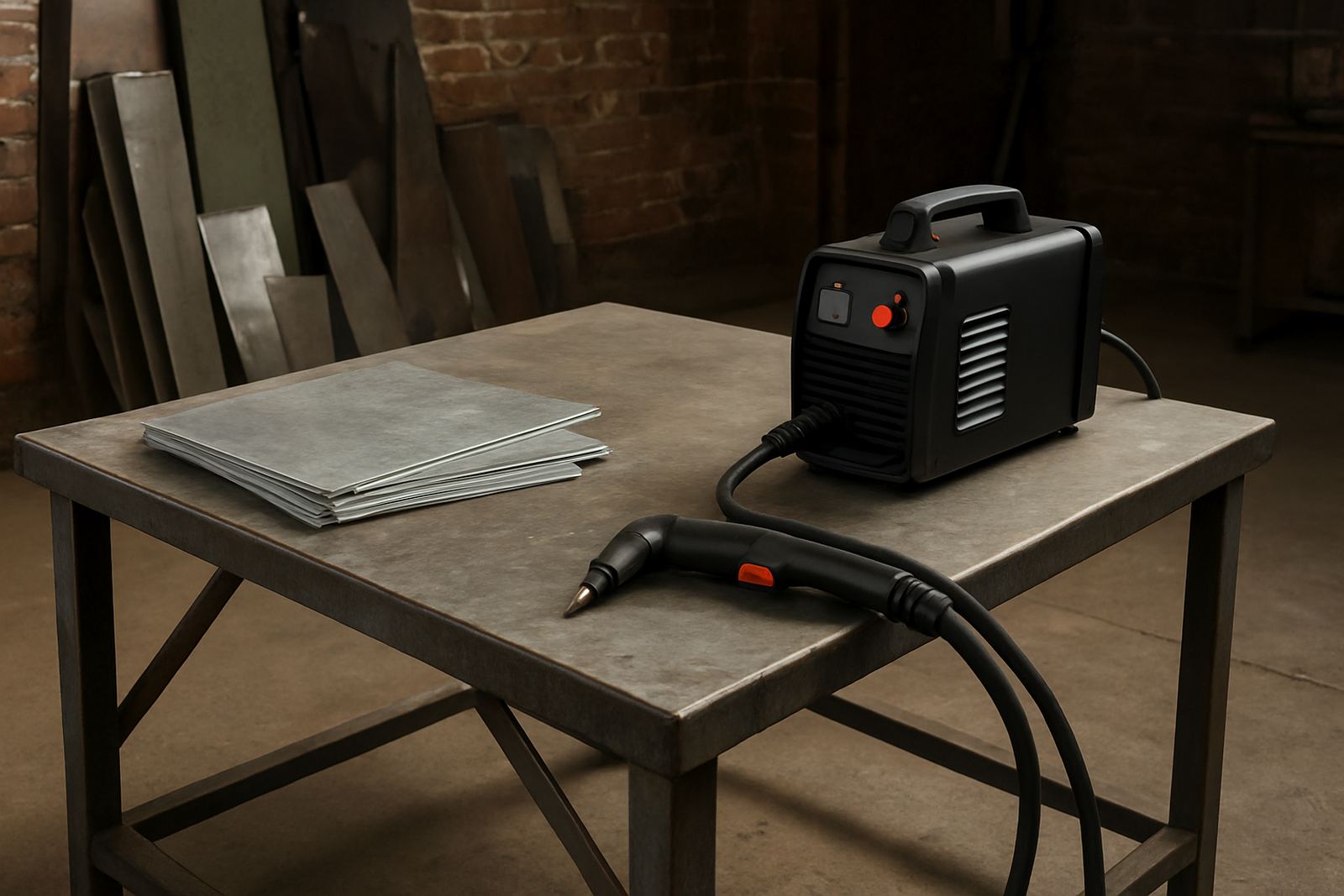
Typical equipment set for gate and railing fabrication
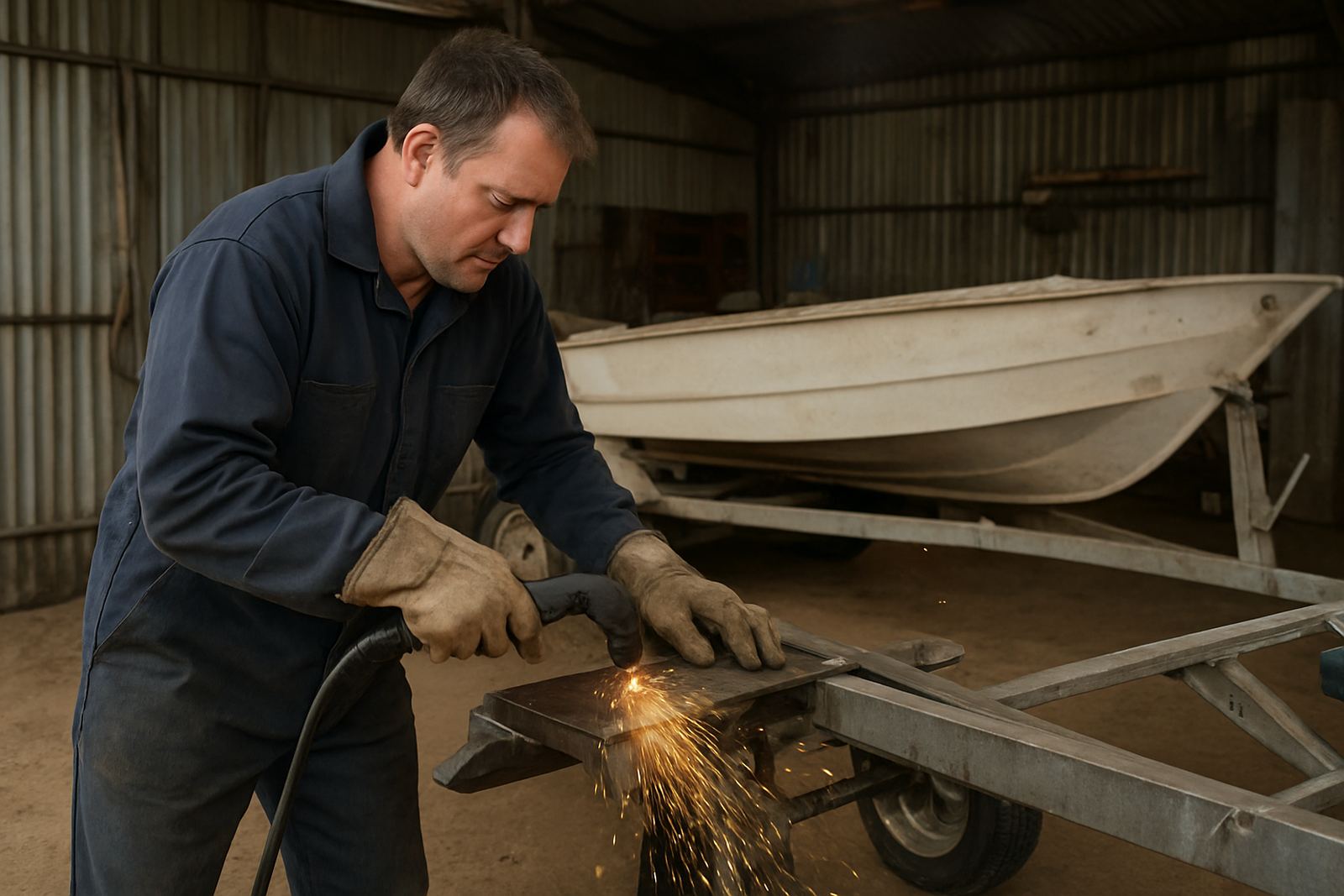
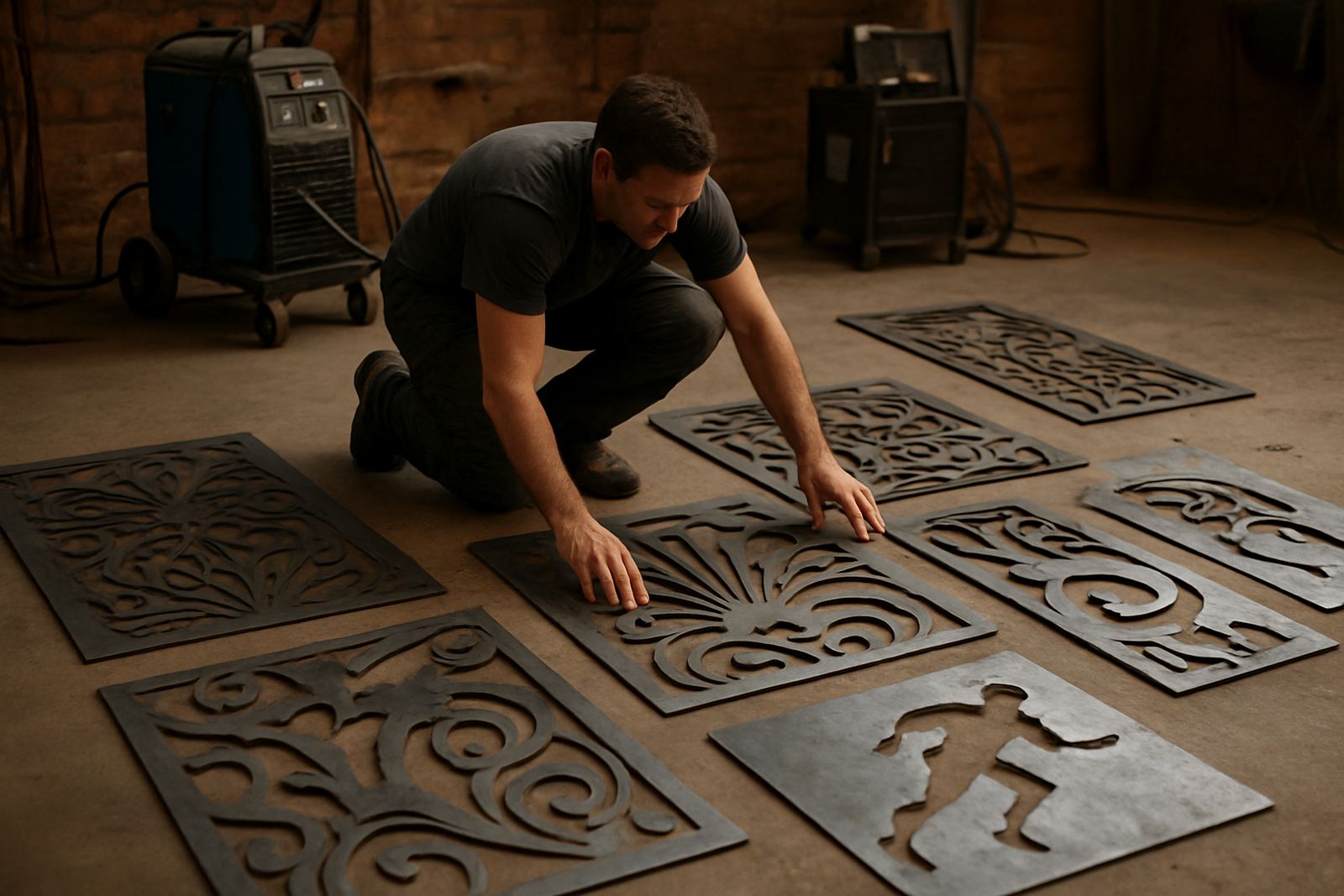
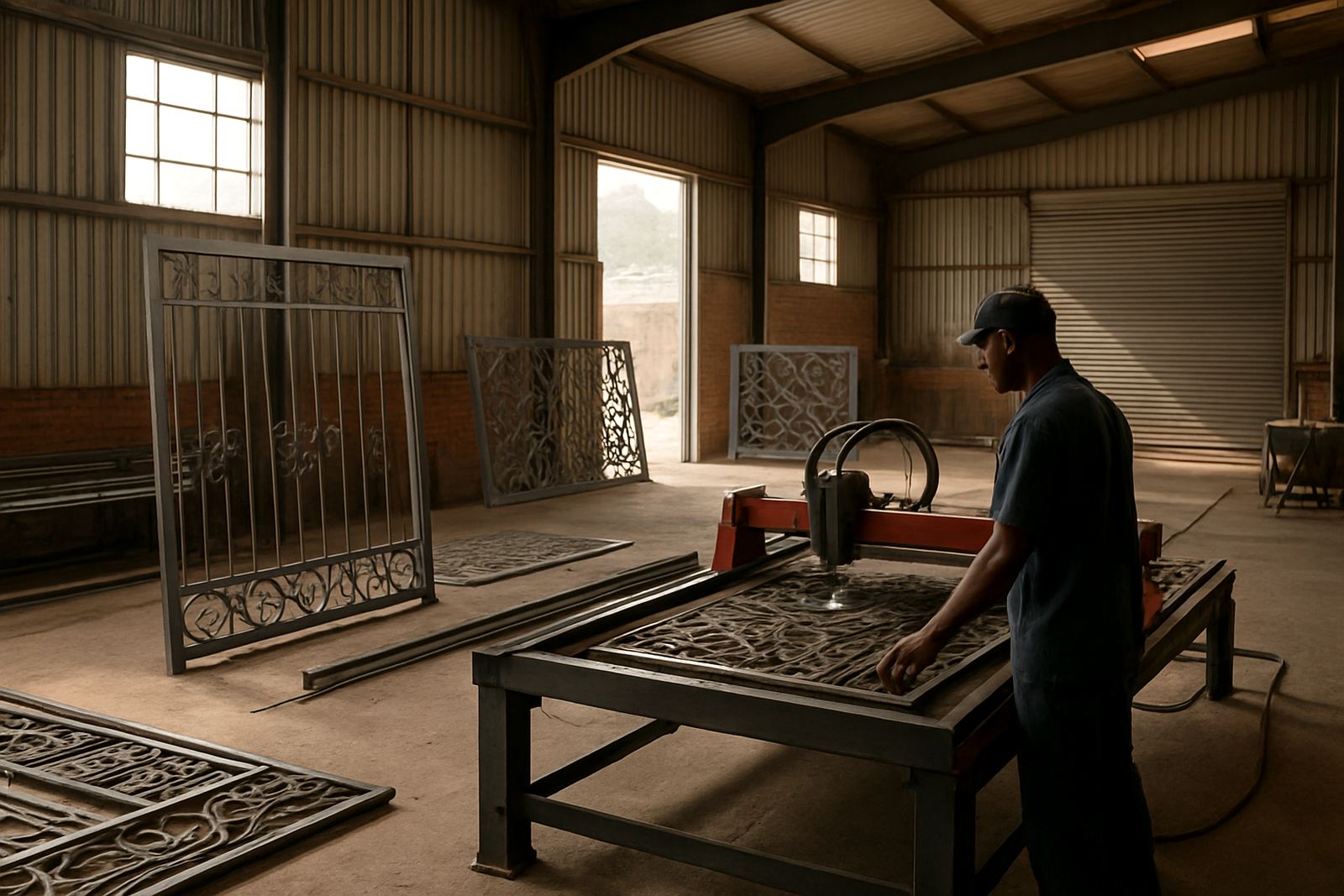
Most workshops handling gates and railings use a mix of handheld plasma cutting and CNC cutting, depending on the job volume. A handheld unit is useful for trimming hinge plates, cutting on site repairs, shaping returns and dealing with one-off adjustments. CNC is better for repeat panels, logo cut-outs, scroll work, hole patterns and matching pairs for double gates.
- Handheld plasma cutter for repairs, modifications and site fitting
- CNC plasma table for repeat parts, infill plates and patterned panels
- Clean dry compressed air supply with proper filtration
- Height control and good table levelling for cleaner edge quality
- Extracted or well-ventilated cutting area for fumes and dust
If you are cutting decorative steel that will be powder coated or painted, the edge quality needs to be good enough for finishing without heavy grinding. That matters even more near the coast, where humidity can bring on flash rust quicker than expected. In those conditions it helps to keep consumables, plate and cut parts dry and covered.
Planning the layout before you strike an arc
Good planning makes a gate easier to build and easier to hang. Start with the opening size, post positions, clearances for vehicle swing and the type of lock or motor that will be fitted. For railings, check the final height, spacing between bars and any municipal or body corporate requirements before cutting the first piece. Small changes to a drawing are cheaper than reworking a finished panel.
For CNC work, nesting matters. Place parts so the cut path is efficient and the sheet is used well. Keep heat-sensitive details apart where possible, and allow enough tabs or support for small decorative pieces so they do not tip during cutting. In a busy shop, a bit of planning can save hours of cleanup later, no one wants to chase warped plates after the fact.
- Measure the actual opening, not just the drawing dimension
- Check hinge side, lock side and motor arm clearance
- Allow for paint thickness, galvanising or powder coating
- Mark which parts are left and right before cutting
- Confirm fixing holes against the post or wall plate before production
Common mistakes on gates and railings
The most common problem is cutting too fast on material that is thinner than the setup expects. That leaves dross, rounded edges and holes that need to be opened up again. Another issue is poor air supply. Wet air or low pressure can shorten consumable life and leave an ugly edge, especially on long jobs where the torch is running for most of the shift.
Fabricators also get caught by heat distortion on narrow infill sections. If the panel is not supported properly, the parts can pull out of square and you only notice it when the frame is on the bench. On site, the usual mistake is not checking the post line before final weld-up. A gate that looks straight in the workshop may sit skew once it is hung against an uneven wall or paving line.
- Using worn consumables past their useful life
- Running dirty or wet compressed air
- Skipping test cuts on new plate thicknesses
- Ignoring twist in long flat bars or frame members
- Forgetting finishing allowance for paint, galvanising or sealant
Budget ranges for workshop and site work
Budget depends on the thickness you cut, the amount of detail in the work and whether you want handheld, CNC or both. For gate and railing fabrication, smaller handheld machines are often enough for repair work and light production, while heavier workshop units suit thicker ornamental bases and structural pieces. A proper CNC setup costs more upfront but can pay back quickly if you do repeat panels or contract work.
As a practical guide, entry-level handheld plasma cutting setups for light fabrication can start in the lower tens of thousands of Rand, while more capable workshop machines sit higher depending on output and duty cycle. CNC tables, height control, filtration and air preparation add to the total, and that is before tooling, spare torches and consumables. For a gate shop in Gauteng or the Free State, it is usually better to budget for the full working system rather than only the power source. A cheap machine with bad air or poor support becomes expensive fast.
- Handheld repair and light fabrication setup: roughly R15 000 to R45 000
- Mid-range workshop unit for regular gate work: roughly R45 000 to R120 000
- CNC table and support equipment: roughly R120 000 to R350 000+
- Consumables, air treatment and spares: budget monthly according to cutting hours
Support for shops, installers and maintenance teams
Gate and railing work does not stop at the cut. Machines need torch repairs, power source repairs, preventive maintenance, consumables checks, air system inspection, CNC table servicing, height control calibration and spares supply. If a machine goes down on a week when you have fitments in Alberton, Germiston or Bloemfontein, fast turnaround matters more than anything else.
We also help with machine commissioning, operator training, on site breakdowns and cut quality audits. That is useful for workshops setting up new production lines or trying to improve finish on decorative panels. Marius van der Merwe leads the business, with Kgomotso Mhlongo handling sales, Johan Botha on technical support, Phenyo Diale coordinating customer support, Ruan Visser handling field service and Naledi Selebalo assisting with training and demos. From the Vereeniging base, demos and servicing are available across Gauteng and the Free State, with the enquiry form on the contact page used for new requests.