What happens after the cut
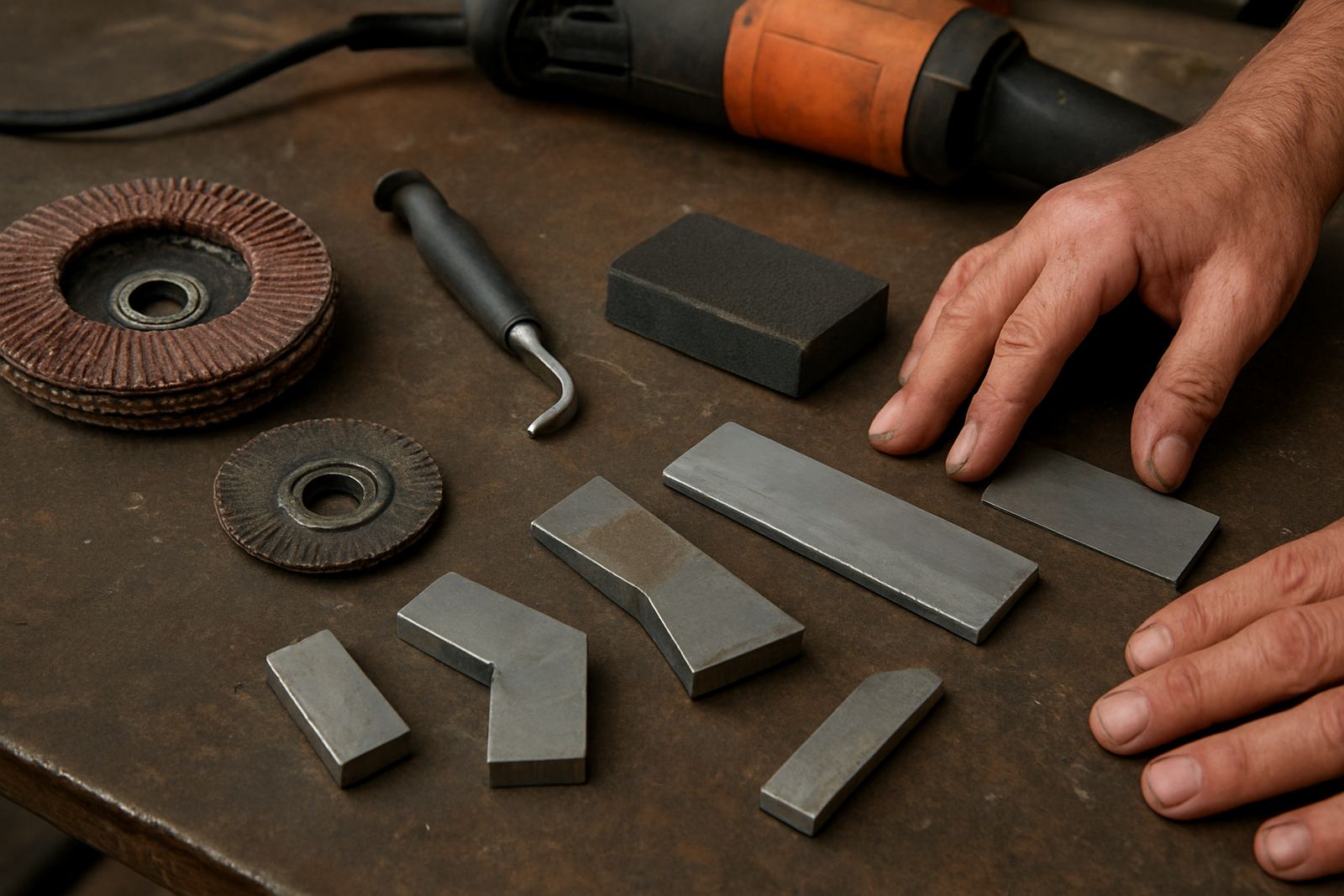
A good plasma cut takes a part most of the way. Someone still has to deal with the oxide on the edge, get the part ready for welding or paint, and work out which bracket belongs to which job. Our note on edge prep after cutting covers why that matters, and the new station lets us show it on real plate.
Heat, dross and a thin oxide film are normal on plasma-cut steel. When the part is heading for welding, painting or galvanising, that edge needs attention. On a busy floor it often gets one quick pass with a flap disc and nothing more.
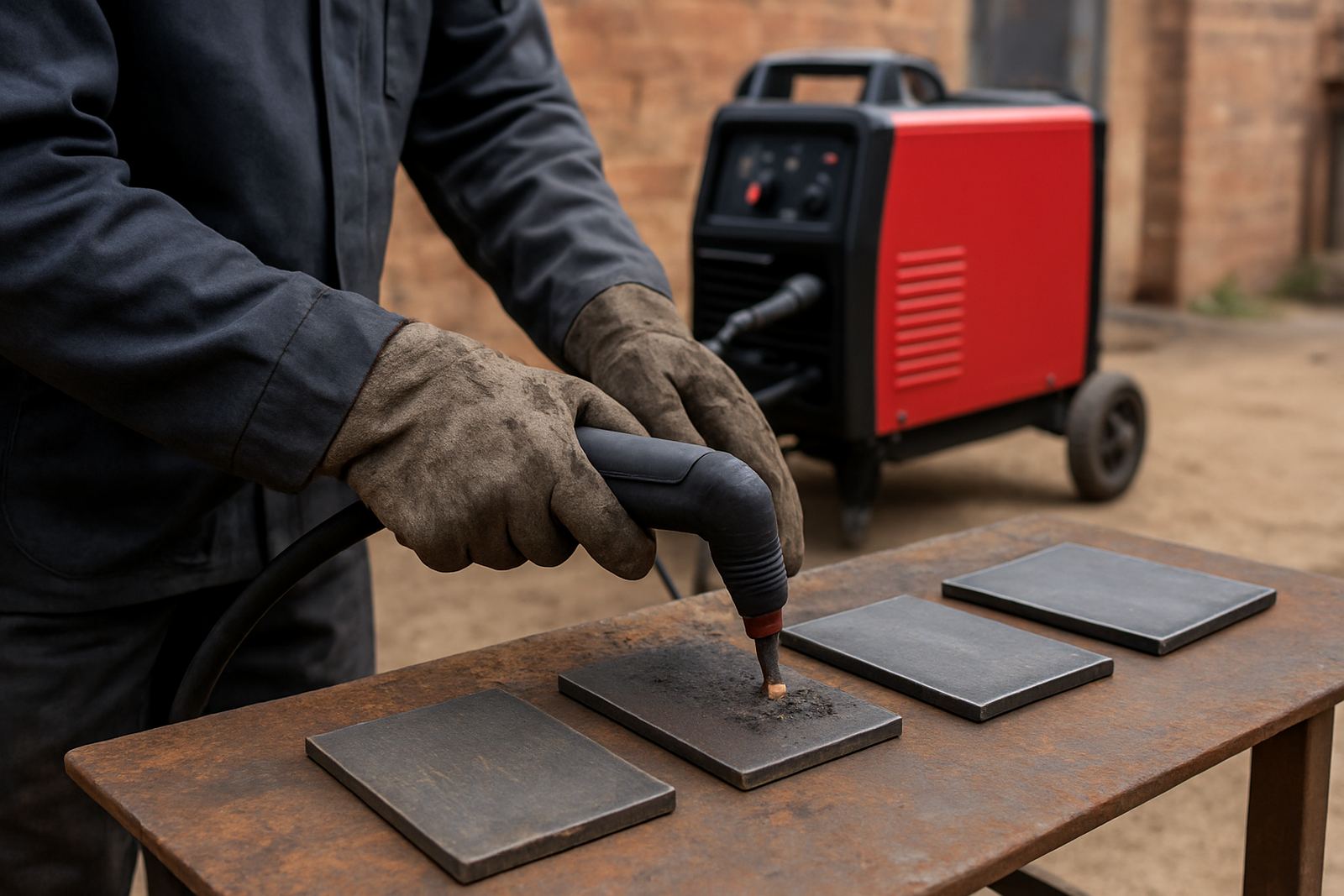
“Customers often ask why the weld on a nice clean cut still looks porous. Most of the time it is the oxide on the edge, not the cut itself. With the laser we can show them on one plate, with one side cleaned and the other left as cut.”
Johan Botha, Technical Lead
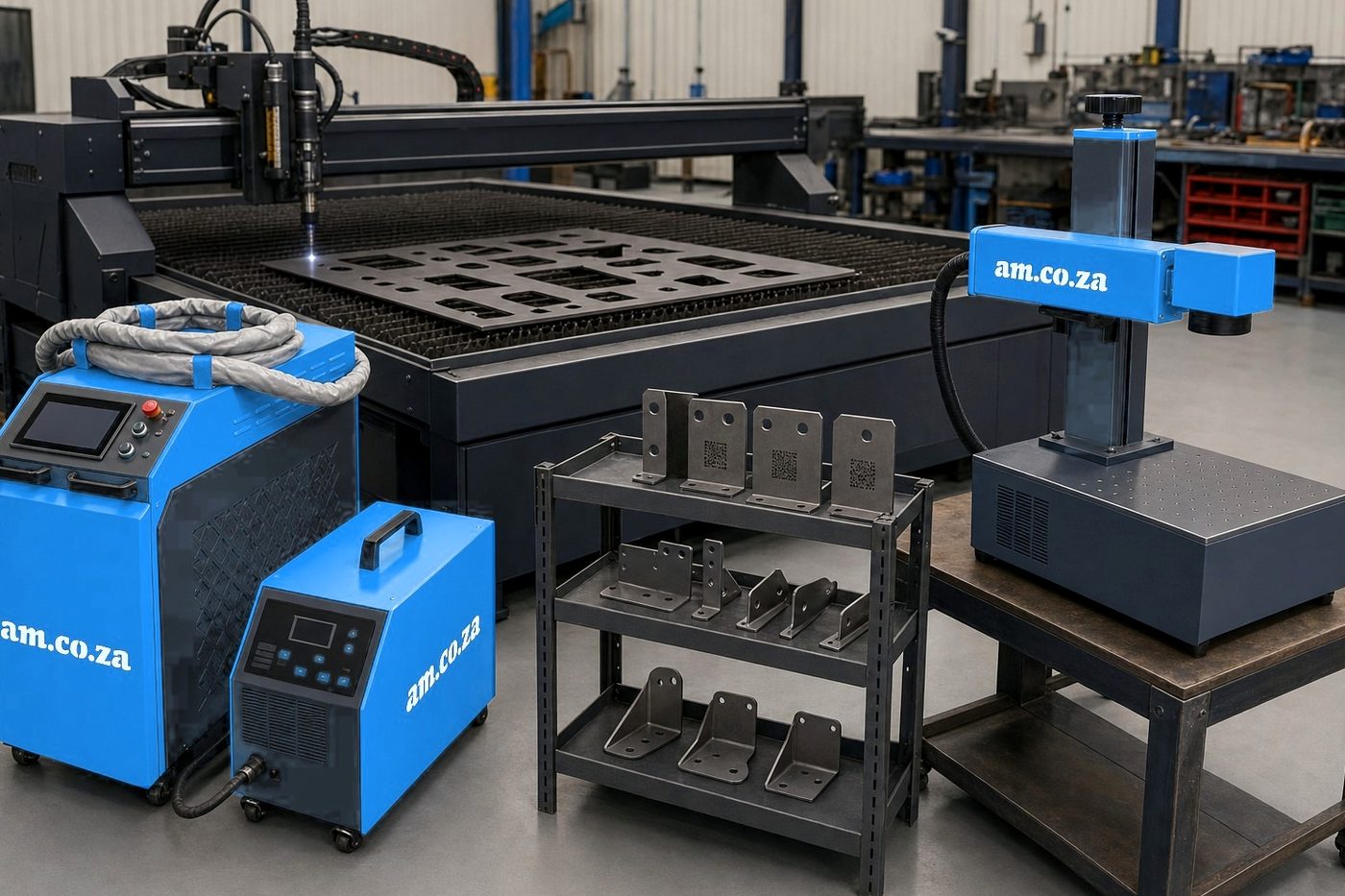
Two AM.CO.ZA machines on one bench
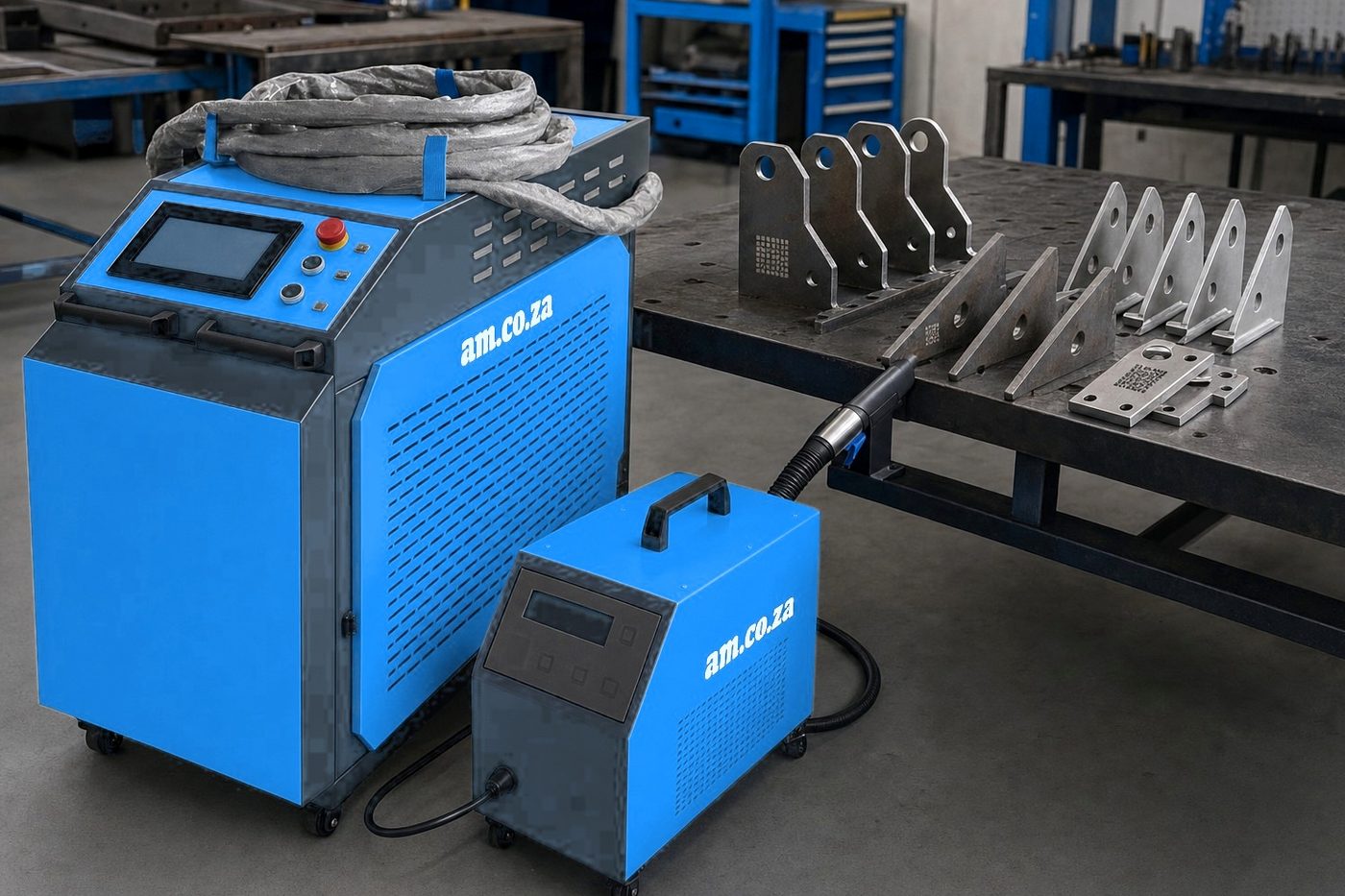
- Handheld fibre laser for edge cleaning. The AM.CO.ZA LaserMaster 2000W handheld fibre laser lifts rust, paint and surface contamination such as oxide off cut edges without a grinding disc. It also welds, which helps when we tack two parts together to show a customer how they fit up. It comes with its own water chiller, and AM.CO.ZA lists more models on its laser cleaners page.
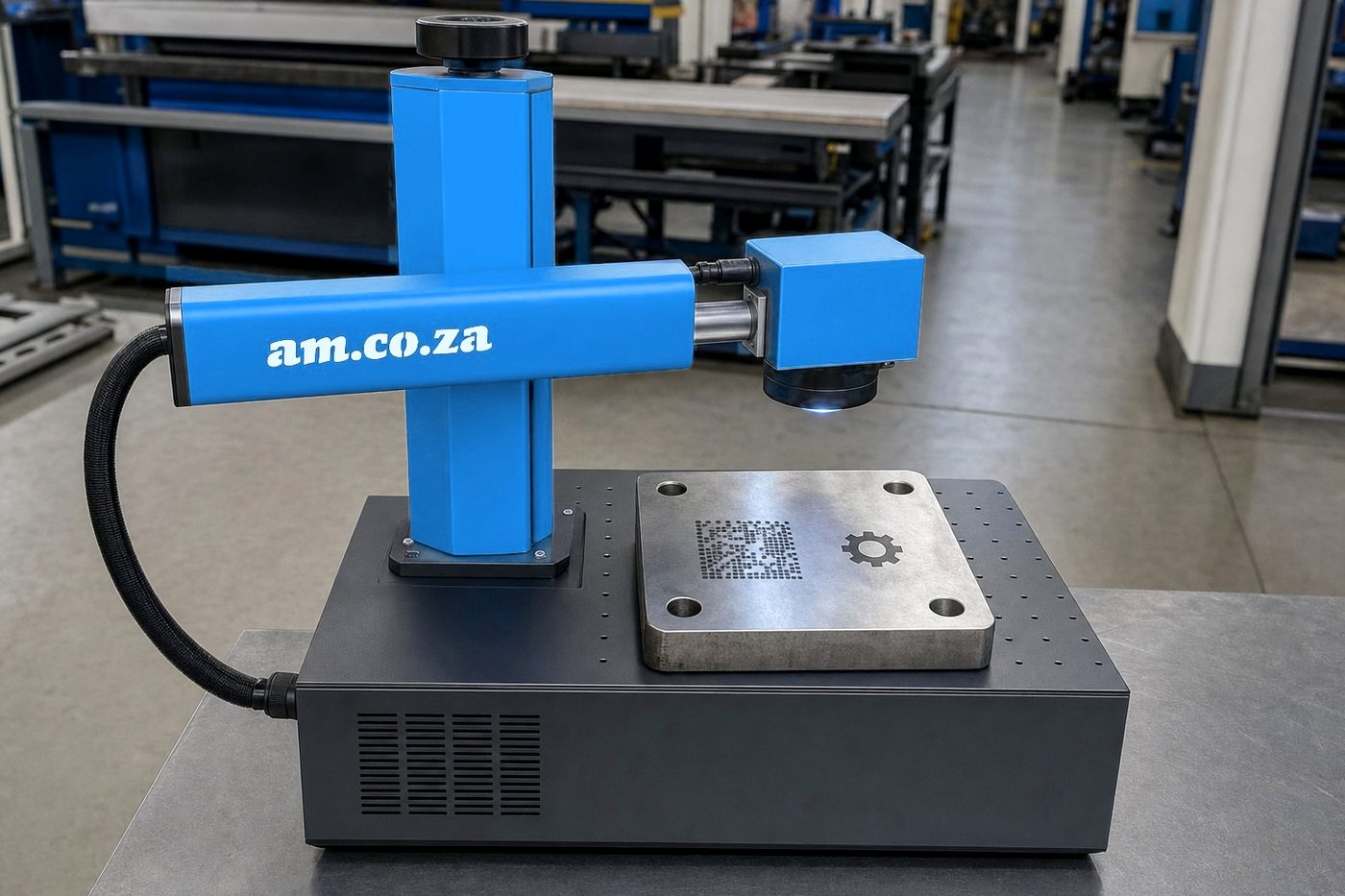
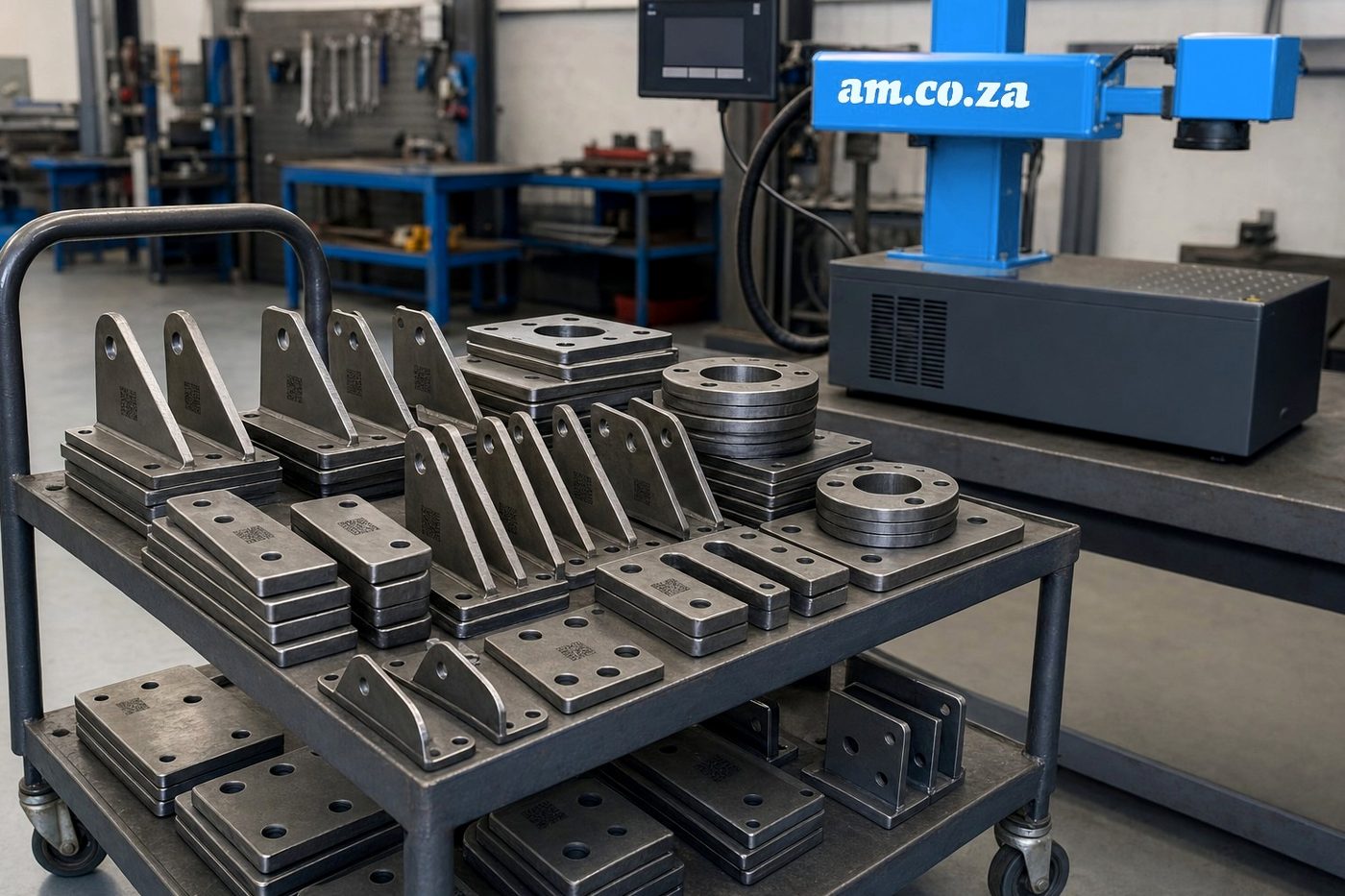
- Benchtop fibre laser marker for part IDs. The AM.CO.ZA LabelMark 50W fibre laser marking machine puts text, serial numbers, barcodes or a logo onto suitable metals inside a 220 × 220 mm field. A red preview beam shows where the mark will land, and a foot switch starts the job. The mark is part of the metal, so there is no paint pen to fade and no sticker to peel. The wider range is on the AM.CO.ZA laser markers page.
Marked parts, fewer mix-ups
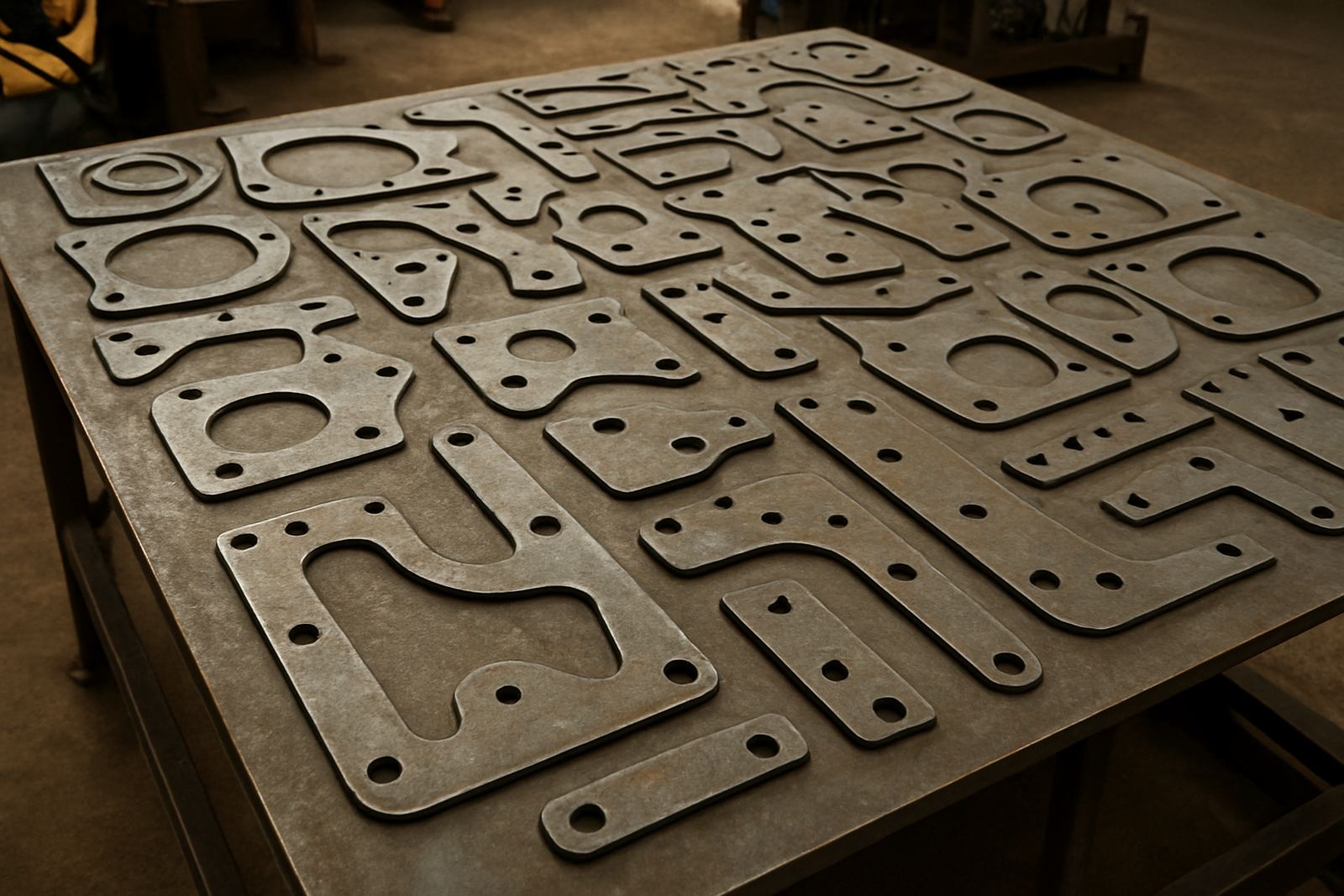
Shops that run a CNC table, such as our CNC mid table, often nest dozens of different parts on one sheet. That saves steel, as we explain in how nesting saves material, but it also leaves a pile of look-alike parts at the end of the shift. A small permanent mark on each one sorts them out before they reach the welding bay.
“For trailer builders and general fabrication shops, this is the part that gets them talking. Once they see a permanent code on every bracket, they start thinking about traceability for their own customers.”
Naledi Selebalo, Training and Demos Consultant
That interest comes mostly from trailer builders and metal fabrication shops, where one order can mean fifty brackets that look almost the same.
Why we went with AM.CO.ZA
Questions before a quote. Their team asked what thickness we cut, what our customers do with parts afterwards and how much floor space the bay has, before suggesting anything. Nobody tried to sell us the biggest machine on the list.
Fair price for the build. Both are solid industrial units, and the handheld laser arrives with its own water chiller. We did not pay for extras we will never use, which is the advice we give our own customers in the fabrication shop guide.
Support close to the Vaal. The AM.CO.ZA Johannesburg branch is an easy drive from the Vaal for spares and advice. Their AM.CO.ZA guide answered most of our setup questions before we needed to call.
“We repair and service machines for a living, so we are fussy about who we buy from. AM.CO.ZA treated us like a workshop and not like a quote number.”
Marius van der Merwe, Managing Director
Ways to use the station
- Demos. Bring your own plate and drawings to a demo and we will cut, clean and mark a sample part with you. Book through the demo request page.
- Cut quality audits. Our cut quality audit now includes a cleaned-edge comparison, which separates defects caused by the cut from those caused by the surface. The note on reducing dross build-up is worth reading before you come in.
- Operator training. Operators on our training courses spend time at the station as part of the finishing module.
Questions about the station can go through the contact form or to our team in Vereeniging.